US National Debt: 10-Year Outlook & 15% Future Impact

Anúncios
The U.S. national debt’s 10-year outlook projects significant challenges, with a potential 15% impact on the economic well-being of future generations.
Understanding The U.S. National Debt: A 10-Year Outlook and Its Projected 15% Impact on Future Generations is crucial for every American. The nation’s fiscal health directly influences everything from job markets to social programs, shaping the economic landscape for decades to come. This article delves into the complexities of this growing challenge.
Anúncios
The Escalating Trajectory of U.S. National Debt
The U.S. national debt has been on a persistent upward trend for decades, driven by a combination of factors including increased government spending, tax cuts, and demographic shifts. This trajectory is not merely a statistical anomaly but a fundamental challenge to the nation’s long-term economic stability. As the debt continues to climb, it raises questions about the government’s ability to fund essential services, respond to future crises, and maintain its global economic standing.
Projections from various non-partisan organizations, such as the Congressional Budget Office (CBO), consistently point to a continued increase in the debt-to-GDP ratio. This ratio, which compares the national debt to the country’s total economic output, is a key indicator of fiscal sustainability. A higher ratio suggests a greater burden on the economy and potentially less flexibility for future policy decisions. The implications extend beyond abstract economic models, directly affecting the daily lives of citizens through potential impacts on inflation, interest rates, and public services.
Anúncios
Historical Context of Debt Accumulation
- Major Wars: Significant increases in debt often correspond with periods of major military conflict, requiring vast government expenditures.
- Economic Recessions: Downturns lead to reduced tax revenues and increased spending on social safety nets, widening deficits.
- Tax Policy Changes: Reductions in tax rates without corresponding spending cuts can contribute to debt growth.
- Entitlement Programs: Growing costs of Social Security and Medicare due to an aging population are long-term drivers of debt.
The historical context reveals a pattern where debt accelerates during crises but often fails to recede sufficiently during periods of economic expansion. This imbalance creates a cumulative effect, pushing the total debt to unprecedented levels. Understanding these historical drivers is essential for comprehending the current situation and formulating effective strategies for the future. The sheer scale of the debt demands a comprehensive and bipartisan approach to fiscal management.
Key Drivers of Future Debt Growth
Several significant factors are expected to fuel the growth of the U.S. national debt over the next decade. These drivers are deeply embedded in the nation’s economic and social fabric, making their mitigation complex and politically challenging. Addressing these underlying causes is paramount to altering the current fiscal trajectory and safeguarding future economic prosperity.
One of the primary drivers is the escalating cost of entitlement programs, particularly Social Security and Medicare. As the baby boomer generation ages, the number of beneficiaries is rising, while the ratio of workers to retirees is declining. This demographic shift places immense pressure on these pay-as-you-go systems, requiring larger government outlays each year. Without significant reforms, these programs will continue to be a dominant force in expanding the national debt.
Rising Healthcare Expenditures
Healthcare costs in the U.S. consistently outpace inflation and economic growth. This trend is driven by various factors, including technological advancements, increased utilization of services, and the rising cost of prescription drugs. Government programs like Medicare and Medicaid bear a substantial portion of these costs, directly contributing to the federal deficit. Controlling healthcare spending is a critical, yet elusive, component of any long-term debt reduction strategy.
- Technological Advancements: New medical technologies and treatments, while beneficial, often come with high price tags.
- Aging Population: The increasing number of older adults requires more extensive and frequent medical care.
- Prescription Drug Costs: The high cost of pharmaceuticals continues to be a major contributor to overall healthcare spending.
- Administrative Complexity: The intricate nature of the U.S. healthcare system adds significant administrative overhead.
Beyond entitlements, interest payments on the existing debt are becoming an increasingly potent driver. As the debt grows, so does the amount the government must pay to service it. If interest rates rise, these payments could surge dramatically, consuming a larger portion of the federal budget and crowding out other critical investments. This creates a feedback loop: higher debt leads to higher interest payments, which further increases the debt. This cycle underscores the urgency of addressing the debt before it becomes an unmanageable burden.
Projected 15% Impact on Future Generations
The projected 15% impact on future generations is not an arbitrary figure but a calculated estimate of the potential reduction in their economic opportunities and living standards due to the accumulating national debt. This impact manifests in various ways, from higher taxes and reduced public services to slower economic growth and diminished national competitiveness. The burden of today’s borrowing will inevitably fall on tomorrow’s taxpayers, altering their economic realities in profound ways.
One of the most direct impacts is the potential for higher taxes. As the government struggles to service its debt, future generations may face increased tax rates on income, consumption, or assets. This could reduce their disposable income, limit their ability to save and invest, and dampen overall economic activity. Moreover, a significant portion of government revenue might be diverted to debt servicing rather than investing in education, infrastructure, or research, which are vital for long-term growth.
Crowding Out Private Investment
A large national debt can lead to what economists call ‘crowding out.’ When the government borrows heavily, it competes with private businesses for available capital. This competition can drive up interest rates, making it more expensive for businesses to borrow money for investment in new factories, technologies, and job creation. Consequently, private sector growth may slow, leading to fewer economic opportunities and lower productivity for future generations.
- Reduced Capital Availability: Government borrowing can absorb a significant portion of the nation’s savings.
- Higher Interest Rates: Increased demand for capital can push up borrowing costs for businesses and individuals.
- Slower Economic Growth: Less private investment can translate into lower long-term economic expansion.
- Lower Wages and Productivity: Reduced capital per worker can lead to slower wage growth and lower productivity gains.
Furthermore, the debt can limit the government’s flexibility to respond to future crises. Should another economic recession, pandemic, or national security threat emerge, a heavily indebted government would have fewer fiscal tools at its disposal. This could lead to more severe and prolonged crises, further exacerbating the economic challenges faced by younger generations. The 15% impact serves as a stark reminder of the intergenerational transfer of fiscal responsibility.
Economic Consequences and Risks
The U.S. national debt carries a range of significant economic consequences and risks that could undermine the nation’s prosperity and stability. These risks are not theoretical; they represent tangible threats to economic growth, financial markets, and the overall standard of living. Understanding these potential outcomes is essential for appreciating the gravity of the current fiscal trajectory.
One of the most immediate concerns is the potential for higher inflation. While not a direct consequence in all circumstances, sustained large deficits can, under certain conditions, lead to an increase in the money supply or a loss of confidence in the currency, both of which can fuel inflationary pressures. This erodes the purchasing power of citizens, particularly those on fixed incomes, and can destabilize financial markets. The interplay between fiscal policy and monetary policy becomes critical in such scenarios.
Impact on Global Standing
The U.S. dollar’s role as the world’s primary reserve currency and the nation’s position as a global economic leader are underpinned by its perceived economic stability and fiscal responsibility. A spiraling national debt could erode this confidence, potentially leading to a decline in the dollar’s value and increased borrowing costs for the U.S. government on international markets. This would have far-reaching implications for global trade and finance.
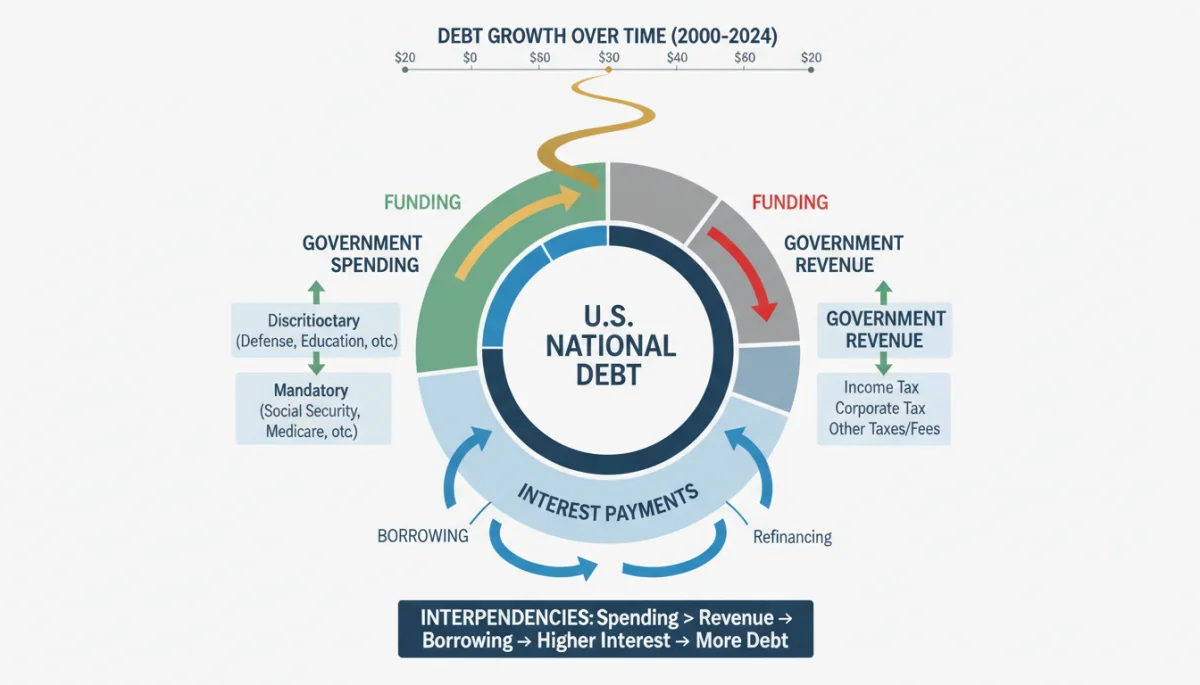
Another critical risk is a potential fiscal crisis. While unlikely in the short term for the U.S. due to its unique economic position, a scenario where investors lose confidence in the government’s ability to repay its debt could lead to a sudden spike in interest rates, making it prohibitively expensive to borrow. Such a crisis could trigger a severe recession, widespread unemployment, and a dramatic reduction in public services. This extreme outcome highlights the importance of proactive fiscal management.
Policy Options for Debt Reduction
Addressing the formidable challenge of the U.S. national debt requires a comprehensive and balanced approach, integrating various policy options. There is no single, easy solution, and any effective strategy will likely involve a combination of spending cuts, revenue enhancements, and economic growth initiatives. Political will and bipartisan cooperation are crucial for implementing meaningful and sustainable reforms.
One broad category of solutions involves reducing government spending. This could entail reforms to entitlement programs like Social Security and Medicare, adjusting eligibility ages, benefit formulas, or means-testing. It could also involve cuts to discretionary spending, ranging from defense to various federal agencies. However, such cuts often face strong political opposition due to their direct impact on constituents and established programs. The challenge lies in identifying areas where reductions can be made without unduly harming essential services or vulnerable populations.
Enhancing Government Revenues
- Tax Reform: Adjusting income tax rates, corporate tax rates, or introducing new taxes (e.g., carbon tax, value-added tax) to increase federal revenue.
- Closing Tax Loopholes: Eliminating tax deductions, credits, or exemptions that disproportionately benefit certain individuals or corporations.
- Improved Tax Enforcement: Investing in the IRS to enhance its ability to collect taxes already owed, reducing the tax gap.
Another set of options focuses on increasing government revenues. This could involve raising existing tax rates, broadening the tax base, or introducing new types of taxes. For example, some economists advocate for a consumption tax or a carbon tax, while others suggest adjustments to corporate or individual income tax rates. Any tax increase, however, carries its own set of economic and political considerations, including potential impacts on economic growth and income distribution. The key is to design revenue policies that are efficient, equitable, and conducive to long-term economic health.
Finally, fostering robust economic growth is a powerful, though often indirect, tool for debt reduction. A stronger economy generates more tax revenue and reduces the need for certain social safety net spending, thereby improving fiscal metrics. Policies that promote innovation, enhance productivity, invest in human capital, and support entrepreneurship can contribute to higher GDP growth. While economic growth alone cannot solve the debt problem, it can make other policy options more palatable and effective by increasing the size of the economic pie.
The Role of Fiscal Responsibility in a Global Economy
In an increasingly interconnected global economy, the fiscal responsibility of the U.S. holds significant implications not only for its own citizens but also for the international financial system. The sheer size and influence of the American economy mean that its fiscal health reverberates across borders, affecting trade, investment, and global financial stability. Maintaining fiscal discipline is therefore not just a domestic concern but a global imperative.
The U.S. dollar’s status as the world’s primary reserve currency grants the nation unique advantages, including lower borrowing costs and greater flexibility in monetary policy. However, this privilege comes with a responsibility to manage its finances prudently. A perception of fiscal irresponsibility could undermine confidence in the dollar, potentially leading to currency instability and disruptions in international trade and capital flows. This would have cascading effects on economies worldwide, highlighting the intricate linkages within the global financial architecture.
International Economic Stability
The stability of the U.S. economy directly contributes to global economic stability. As a major consumer and investor, the health of the American market influences demand for goods and services from other countries. A U.S. fiscal crisis could trigger a global economic downturn, impacting growth, employment, and poverty reduction efforts worldwide. Therefore, sound U.S. fiscal policy is a public good for the international community.
Moreover, the U.S. government’s ability to fund its foreign policy objectives, humanitarian aid, and international alliances is tied to its fiscal strength. A nation burdened by excessive debt may find its capacity to act on the global stage constrained, potentially leading to a vacuum in leadership or a reduction in its ability to address pressing global challenges such as climate change, pandemics, and geopolitical conflicts. Fiscal responsibility thus underpins both domestic prosperity and international influence.
Future Outlook and Generational Equity
The long-term outlook for the U.S. national debt presents a critical juncture, demanding difficult choices and a renewed commitment to generational equity. The decisions made today will profoundly shape the economic landscape for future generations, determining whether they inherit a legacy of prosperity and opportunity or one of fiscal constraint and diminished prospects. Achieving a sustainable fiscal path requires a forward-looking perspective that prioritizes the well-being of those who will bear the ultimate cost of current policies.
Generational equity, in this context, refers to the principle that each generation should not unduly burden future generations with the costs of its own consumption and spending. The current trajectory of the national debt suggests a significant intergenerational transfer of wealth, where younger generations will likely face higher taxes and reduced public services to pay for the benefits enjoyed by older generations. Addressing this imbalance is a moral and economic imperative, requiring honest conversations and collaborative solutions across the political spectrum.
Sustainable Fiscal Path
- Long-Term Planning: Implementing fiscal policies with a clear view of their implications over several decades, not just the next budget cycle.
- Bipartisan Cooperation: Developing solutions that transcend political divides, ensuring continuity and stability in fiscal management.
- Public Engagement: Educating citizens about the challenges and trade-offs involved in debt reduction, fostering informed public discourse.
- Economic Resilience: Building an economy that is robust enough to absorb fiscal adjustments without triggering severe downturns.
The future outlook necessitates a re-evaluation of national priorities and a willingness to make difficult trade-offs. This could involve a combination of modest adjustments to entitlement programs, targeted revenue increases, and investments that boost long-term economic growth. The goal is not merely to reduce the debt but to establish a fiscal framework that is sustainable, promotes intergenerational fairness, and ensures the nation’s capacity to thrive in the 21st century. The window for proactive solutions is narrowing, underscoring the urgency of action.
| Key Point | Brief Description |
|---|---|
| Debt Trajectory | U.S. national debt projected to continue rising significantly over the next decade. |
| Future Impact | Estimated 15% reduction in economic opportunities for future generations. |
| Key Drivers | Entitlement costs, healthcare inflation, and rising interest payments fuel debt growth. |
| Policy Options | Spending cuts, revenue increases, and economic growth are needed for debt reduction. |
Frequently Asked Questions About the U.S. National Debt
The U.S. national debt represents the total amount of money the federal government owes its creditors, including public debt held by investors and intragovernmental holdings. It has accumulated over decades due to persistent budget deficits from spending exceeding revenue.
A growing national debt can burden future generations through higher taxes, reduced public services, and slower economic growth. It also limits the government’s ability to invest in critical areas like education and infrastructure, potentially impacting their quality of life.
Key drivers include rising costs of entitlement programs like Social Security and Medicare due to an aging population, increasing healthcare expenditures, and growing interest payments on the existing debt. Tax cuts without corresponding spending reductions also contribute significantly.
While technically possible, a U.S. default is considered highly unlikely due to severe economic and global consequences. The government has mechanisms, such as raising the debt ceiling, to ensure it can meet its obligations, though these often involve political negotiations.
Solutions typically involve a combination of reduced government spending, such as reforms to entitlement programs or cuts to discretionary spending, and increased government revenues through tax reforms or new taxes. Fostering strong economic growth also helps improve fiscal metrics.
Conclusion
The trajectory of the U.S. national debt over the next decade presents a formidable challenge, with a projected 15% impact on the economic prospects of future generations. This complex issue, driven by demographic shifts, escalating healthcare costs, and rising interest payments, demands immediate and thoughtful attention. While there are no easy answers, a combination of fiscal discipline, strategic spending adjustments, revenue enhancements, and sustained economic growth offers a path toward a more sustainable future. Addressing this challenge is not merely an economic necessity but a moral imperative to ensure generational equity and safeguard the nation’s long-term prosperity and global standing.
