Batch Cooking for Busy Weeks: 7 Meals in Under 2 Hours
Anúncios
Batch cooking allows for the efficient preparation of multiple meals in a single session, significantly reducing daily cooking time and ensuring healthy, homemade options are readily available throughout busy weeks.
Anúncios
In today’s fast-paced world, finding time for wholesome, home-cooked meals can feel like an impossible task. However, with strategic planning and efficient techniques, it’s entirely possible to master batch cooking 7 meals in under two hours. This approach not only saves valuable time during busy weeknights but also promotes healthier eating habits and reduces stress.
The foundational principles of effective batch cooking
Batch cooking isn’t just about cooking large quantities; it’s about smart planning and maximizing your time in the kitchen. By understanding its core principles, you can transform your meal preparation process from a daunting chore into an enjoyable and efficient routine. This method hinges on strategic ingredient sourcing, thoughtful menu planning, and mastering cooking techniques that yield multiple components simultaneously.
Strategic menu planning for efficiency
The cornerstone of successful batch cooking is a well-thought-out menu. Choose recipes that share common ingredients or cooking methods to streamline your prep time. This could mean selecting dishes that all utilize roasted vegetables or a large batch of cooked grains.
Anúncios
- Identify versatile ingredients: Opt for staples like chicken, rice, quinoa, and various vegetables that can be incorporated into different meals.
- Plan for ingredient overlap: Design your menu so that one prepared component, such as cooked chicken, can be used in a salad, a stir-fry, and a wrap.
- Consider diverse flavor profiles: While using common ingredients, ensure your final meals offer variety to prevent palate fatigue.
Effective menu planning goes beyond just selecting recipes; it involves visualizing how each component will contribute to the week’s meals. Think about textures, colors, and nutritional balance to create a satisfying and diverse culinary experience. A well-planned menu ensures that your batch cooking session is productive and that your week’s meals are exciting.
Optimizing your kitchen for a speedy session
A well-organized kitchen is crucial for any efficient cooking endeavor, especially when aiming to prepare seven meals in under two hours. Before you even start chopping, take a few minutes to set up your space. This pre-preparation step can significantly cut down on your total cooking time and reduce stress.
Essential tools and equipment
Having the right tools at your fingertips can make a world of difference. Investing in a few key items will pay dividends in speed and convenience.
- Sharp knives: Essential for quick and safe chopping.
- Large cutting boards: Provide ample space for preparing multiple ingredients simultaneously.
- Food processor: Speeds up chopping, grating, and slicing of vegetables.
- Multiple sheet pans: Perfect for roasting various vegetables or proteins at once.
- Airtight containers: Crucial for storing your prepared meals and ingredients, keeping them fresh.
Beyond these, consider a large stockpot for grains or soups, and a powerful blender for sauces or smoothies. These tools are not just about convenience; they enable you to perform multiple tasks in parallel, which is key to shaving minutes off your batch cooking time. Ensure everything is clean and easily accessible before you begin.
Ingredient preparation: The ultimate time-saver
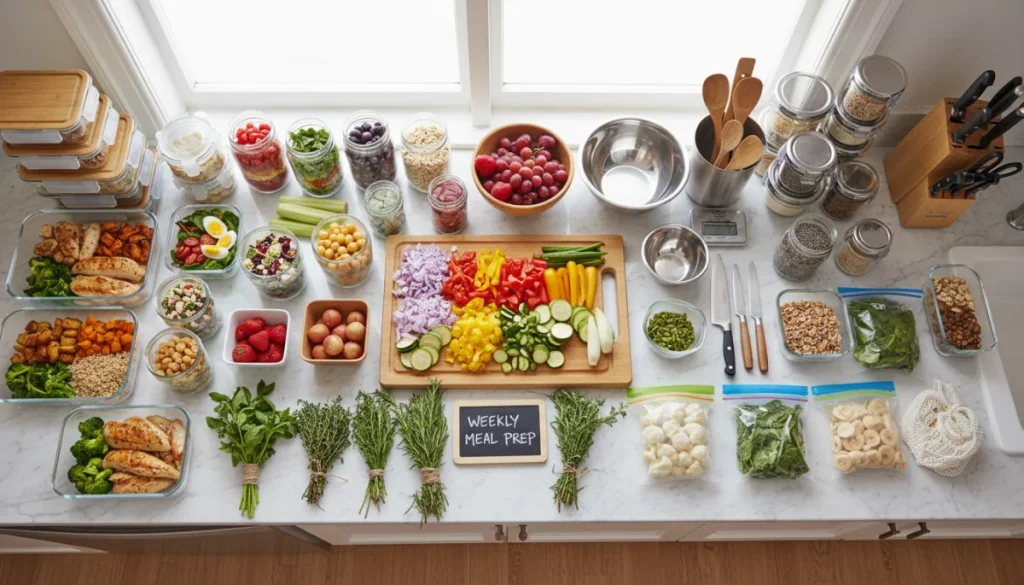
The real magic of batch cooking lies in efficient ingredient preparation. This phase, often called ‘mise en place,’ involves getting all your ingredients prepped and ready before any actual cooking begins. It’s about grouping similar tasks and executing them in a logical sequence to minimize back-and-forth movement and maximize productivity.
Batch chopping and dicing
Dedicate a block of time solely to chopping all your vegetables. Whether it’s onions, bell peppers, carrots, or leafy greens, having them pre-cut means they’re ready to be added to any dish without delay. Use a large cutting board and sharp knives to make this process swift and safe. Consider the final use of each vegetable; for example, some might be diced for a stir-fry, while others are cut into larger chunks for roasting.
Pre-measuring and portioning
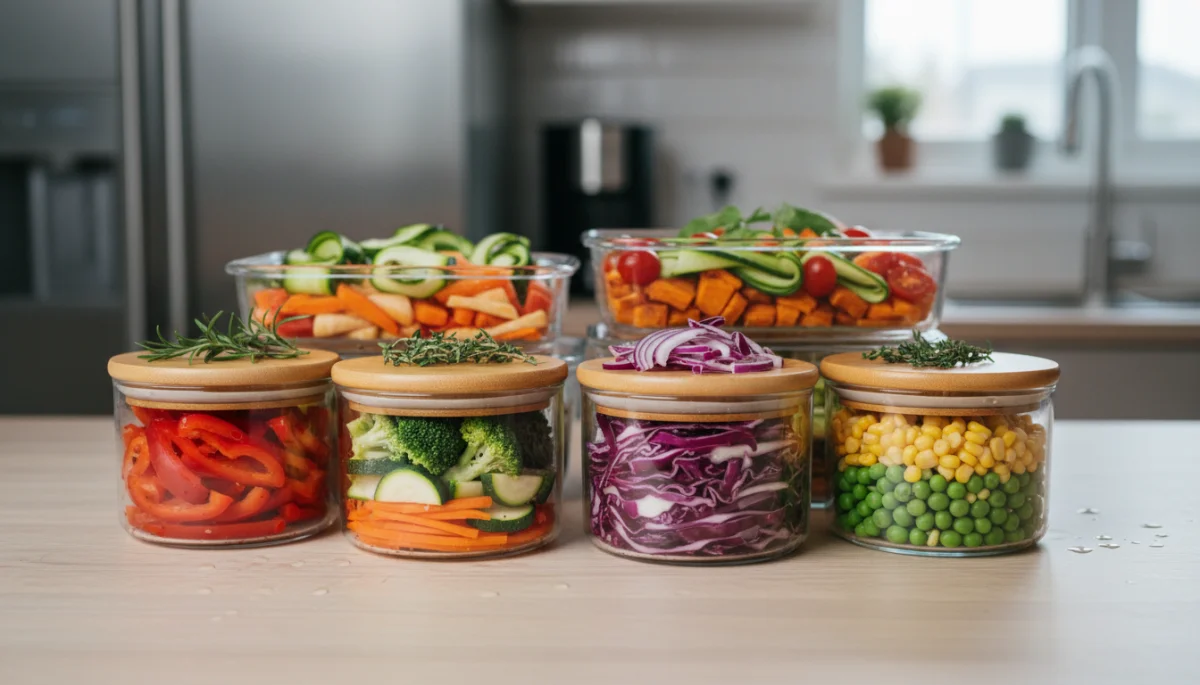
Once ingredients are chopped, measure them out according to your recipes and portion them into small containers or bags. This step is particularly helpful for spices, sauces, or even dry goods like pasta or rice. When it’s time to cook a specific meal, you simply grab the pre-portioned ingredients and combine them. This eliminates the need for measuring during the cooking phase, saving precious minutes and reducing mess. Labeling these containers can also prevent confusion later in the week.
By investing time upfront in thorough ingredient preparation, you create a seamless cooking environment. This systematic approach ensures that when you actually turn on the stove, the cooking process itself becomes a quick assembly line, rather than a series of individual tasks. It’s a foundational step that underpins the entire efficiency of batch cooking.
Cooking strategies for multiple meals simultaneously
Once your ingredients are prepped, the next step is to cook them efficiently. The goal is to maximize the use of your kitchen appliances and stovetop space to get multiple components cooking at the same time. This requires a bit of orchestration but is highly rewarding in terms of time saved.
Multi-tasking with appliances
Utilize every cooking method at your disposal. While one batch of vegetables roasts in the oven, you can be boiling grains on the stovetop and sautéing protein in a pan. An Instant Pot or slow cooker can also be invaluable, allowing you to cook a large batch of soup, stew, or shredded meat with minimal oversight.
- Oven roasting: Roast several types of vegetables (broccoli, sweet potatoes, bell peppers) and even proteins (chicken breasts, salmon fillets) on different sheet pans simultaneously.
- Stovetop versatility: Use multiple burners to cook grains, sauté aromatics, or simmer sauces.
- Pressure cooking: Prepare large quantities of rice, beans, or even entire stews in a fraction of the time.
Consider the cooking times of different items. Start with those that take the longest, like roasted root vegetables or slow-cooked meats, and then move on to quicker-cooking items. This layered approach ensures everything finishes around the same time, ready for assembly. This synchronization is key to completing your batch cooking session within the two-hour target.
Sample menu and timeline for 7 meals
To truly understand how to prepare seven meals in under two hours, let’s explore a practical example. This sample menu focuses on versatility and shared ingredients, demonstrating how strategic planning translates into efficient execution. The timeline is designed to maximize simultaneous cooking and minimize downtime, making the most of every minute.
A week’s worth of delicious and easy meals
Our sample menu leverages common components that can be reassembled into distinct meals. For instance, a large batch of roasted chicken and quinoa forms the base for several dishes, while a medley of roasted vegetables adds flavor and nutrition across the board.
- Meal 1: Quinoa bowls with roasted chicken, black beans, corn, and avocado.
- Meal 2: Chicken and veggie wraps with whole wheat tortillas, mixed greens, and a light dressing.
- Meal 3: Sheet pan chicken and roasted vegetable dinner, seasoned differently.
- Meal 4: Chicken salad sandwiches on whole-grain bread with celery and Greek yogurt.
- Meal 5: Quick chicken and vegetable stir-fry with pre-cooked rice.
- Meal 6: Leftover roasted vegetables and quinoa as a side for a simple omelet.
- Meal 7: Chicken and vegetable soup (using leftover chicken and veggie scraps as broth base).
The beauty of this menu is its adaptability. You can easily swap proteins, add different spices, or incorporate various sauces to keep things interesting. The core idea is to cook large quantities of foundational ingredients that can be mixed and matched throughout the week. This flexibility is what makes batch cooking sustainable and enjoyable.
Storage and reheating for optimal freshness and flavor
Once your meals are cooked, proper storage is paramount to maintaining their freshness, flavor, and safety throughout the week. The way you store and reheat your batch-cooked meals can significantly impact your overall experience and ensure that your efforts in the kitchen don’t go to waste.
Best practices for meal storage
Invest in high-quality, airtight containers, preferably glass, as they are non-reactive and can go from fridge to microwave or oven. Allow all cooked food to cool completely before portioning and storing it. This prevents condensation, which can lead to sogginess and bacterial growth. Labeling containers with the meal name and date cooked can help you keep track of what needs to be eaten first.
- Use airtight containers: Prevents spoilage and keeps food fresh longer.
- Cool food completely: Reduces the risk of bacterial growth and maintains food quality.
- Portion control: Store meals in individual servings for easy grab-and-go options.
- Refrigerate promptly: Ensure food is put into the refrigerator within two hours of cooking.
For items that won’t be consumed within 3-4 days, consider freezing them. Soups, stews, and many cooked proteins freeze exceptionally well. Use freezer-safe bags or containers, removing as much air as possible to prevent freezer burn. Thaw frozen meals in the refrigerator overnight for best results.
Reheating techniques for delicious results
Reheating can sometimes compromise the texture and flavor of food if not done correctly. Different foods benefit from different reheating methods. For example, roasted vegetables often do best when reheated in an oven or toaster oven to restore some crispness, while soups and stews can be gently warmed on the stovetop or in the microwave.
Always ensure food is reheated to an internal temperature of 165°F (74°C) to ensure food safety. Avoid over-reheating, as this can dry out proteins and make vegetables mushy. A little moisture, such as a splash of broth or water, can help keep foods from drying out during reheating. By following these storage and reheating guidelines, your batch-cooked meals will remain appealing and delicious throughout your busy week.
| Key Aspect | Brief Description |
|---|---|
| Strategic Planning | Select recipes with overlapping ingredients to maximize efficiency and minimize cooking time. |
| Efficient Prep | Perform all chopping, dicing, and measuring before cooking to streamline the process. |
| Proper Storage | Cool and store meals in airtight containers to maintain freshness and safety. |
Frequently asked questions about batch cooking
Select recipes that feature versatile ingredients and similar cooking methods. Look for dishes where components can be easily mixed and matched, such as roasted vegetables, cooked grains, and lean proteins, allowing for diverse meals throughout the week without repetitive flavors.
Airtight glass containers are highly recommended. They are durable, non-reactive, and suitable for both refrigeration and reheating in the microwave or oven. Plastic containers can also work, but ensure they are BPA-free and microwave-safe to maintain food quality and safety.
Most batch-cooked meals, when properly stored in airtight containers, will remain fresh in the refrigerator for 3 to 4 days. For longer storage, many dishes can be frozen for up to 3 months, offering even greater flexibility for busy schedules.
While many meals freeze well, some foods, like leafy greens or dishes with high water content, may become mushy upon thawing. Soups, stews, casseroles, cooked grains, and most proteins are excellent candidates for freezing. Always test a small portion first if unsure.
The best reheating method depends on the dish. Oven or toaster oven works well for roasted items to restore crispness. Microwaving is quick for most dishes, while stovetop reheating is ideal for soups and saucy meals. Always ensure food reaches 165°F (74°C) for safety.
Conclusion
Mastering batch cooking is a game-changer for anyone navigating a busy schedule. By dedicating just a couple of hours to strategic meal preparation, you can ensure a week filled with nutritious, delicious, and stress-free meals. This approach not only saves time but also fosters healthier eating habits and reduces food waste. Embrace the power of planning and efficient cooking to transform your weeknights and enjoy the benefits of homemade goodness every day.
