20/20/20 Rule: Combat Digital Eye Strain, Boost Focus

Anúncios
The 20/20/20 Rule, a simple practice of looking at something 20 feet away for 20 seconds every 20 minutes, effectively combats digital eye strain and enhances focus.
Anúncios
In our increasingly digital world, the challenge of maintaining eye health and sharp focus is more pressing than ever. This article explores how
the 20/20/20 Rule: A Simple Hack to Combat Digital Eye Strain and Boost Focus by 15% in 2026 can be your most effective strategy for a healthier, more productive digital life.
Understanding digital eye strain in 2026
Digital eye strain, also known as computer vision syndrome (CVS), is a prevalent condition in our screen-dominated society. As we increasingly rely on digital devices for work, education, and entertainment, our eyes are subjected to unique stressors that can lead to discomfort and reduced productivity. Understanding the nuances of this modern affliction is the first step toward effective prevention and management.
The symptoms of digital eye strain are varied and can significantly impact daily life. Many individuals report experiencing dry eyes, characterized by a gritty sensation or excessive tearing, due to reduced blink rates when focusing intently on screens. Headaches, often described as dull or throbbing, are another common complaint, frequently radiating from the temples or forehead. Blurred vision, both near and distant, can also occur, making it difficult to shift focus between tasks or objects in the environment. Neck and shoulder pain often accompany these ocular symptoms, stemming from poor posture adopted while using digital devices.
Anúncios
The science behind the strain
The human eye is not naturally designed for prolonged close-up work, especially with illuminated screens. Digital screens emit blue light, which, while not inherently harmful in moderate doses, can contribute to eye fatigue over extended periods. Furthermore, the constant need for our eyes to adjust to varying contrasts, glare, and flicker rates on digital displays places an additional burden on the visual system. This continuous effort leads to muscle fatigue in the eyes, similar to how any other muscle would tire after sustained exertion.
- Reduced blink rate: Staring at screens often leads to fewer blinks, causing dry eyes.
- Blue light exposure: Prolonged exposure can contribute to eye fatigue and disrupt sleep patterns.
- Accommodation issues: Constant refocusing on pixels strains the ciliary muscles.
- Glare and contrast: Poor screen settings amplify the effort required by the eyes.
In conclusion, recognizing the multifaceted nature of digital eye strain is crucial. It’s not merely about tired eyes; it encompasses a range of physical discomforts that can collectively diminish well-being and efficiency. Addressing these underlying causes through proactive measures is essential for anyone navigating the digital landscape of 2026.
The 20/20/20 Rule: a simple yet powerful solution
Amidst the complexities of modern eye care, the 20/20/20 Rule Digital Eye Strain stands out as an elegantly simple yet profoundly effective solution. This widely recommended practice offers a straightforward approach to mitigating the adverse effects of prolonged screen time. Its beauty lies in its accessibility and the minimal disruption it causes to your workflow, making it an ideal habit for anyone who spends significant time in front of digital displays.
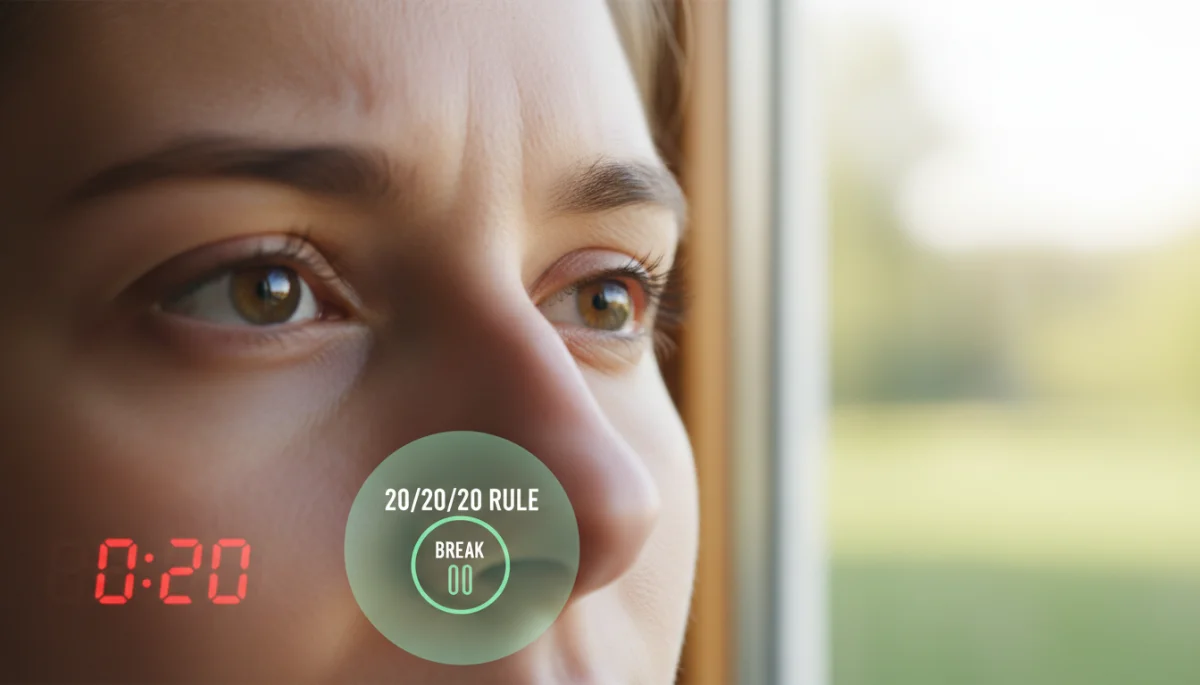
The rule itself is remarkably easy to remember and implement: every 20 minutes, look at something 20 feet away for at least 20 seconds. This simple act provides a crucial break for your eyes, allowing them to relax and refocus. When we concentrate on a screen, our ciliary muscles, responsible for focusing, are in a constant state of contraction. By shifting our gaze to a distant object, these muscles can relax, preventing fatigue and strain.
Implementing the rule effortlessly
Integrating the 20/20/20 Rule into your daily routine doesn’t require drastic changes. Many find success by setting a simple timer on their phone or computer, which serves as a gentle reminder to take a break. There are also numerous free applications and browser extensions designed specifically to prompt users to follow the rule. These tools can be customized to fit individual schedules and preferences, ensuring that breaks are taken regularly without feeling intrusive.
- Set a timer: Use a physical timer, phone alarm, or desktop reminder every 20 minutes.
- Find a focal point: Identify an object 20 feet away – a window, a picture, or a distant wall.
- Blink consciously: During your 20-second break, make an effort to blink fully to re-lubricate your eyes.
- Consistency is key: Make it a habit, even on busy days, for maximum benefit.
The impact of this consistent practice extends beyond immediate eye comfort. Regular breaks can help maintain the natural lubrication of your eyes, reducing the incidence of dry eye symptoms. It also encourages better posture, as stepping away from the screen often involves a slight shift in body position. In essence, the 20/20/20 Rule is a holistic approach to digital well-being, fostering both ocular health and overall physical comfort.
To summarize, the 20/20/20 Rule is a cornerstone of preventative eye care in the digital age. Its straightforward nature belies its profound benefits, offering a practical pathway to healthier eyes and sustained focus. Embracing this habit is an investment in your long-term visual health and productivity.
Boosting focus by 15% in 2026: The neurological link
The promise of boosting focus by 15% in 2026 through practices like the 20/20/20 Rule is not merely anecdotal; it’s rooted in a strong neurological foundation. Our brains are complex organs that thrive on periods of intense concentration interspersed with moments of rest. Prolonged, uninterrupted screen time can lead to cognitive fatigue, diminishing our ability to sustain attention and process information effectively. The 20/20/20 Rule provides a structured way to introduce these necessary cognitive breaks.
When we engage in demanding cognitive tasks, particularly those involving digital screens, our brains are constantly processing visual information, filtering out distractions, and maintaining a high level of alertness. This sustained effort depletes neurotransmitters and energy resources. Without adequate breaks, this depletion can lead to mental exhaustion, characterized by decreased concentration, increased error rates, and a general feeling of being overwhelmed. The short, regular breaks offered by the 20/20/20 Rule act as micro-recharges for the brain.
Cognitive benefits of micro-breaks
The act of shifting focus from a near object to a distant one, even for a mere 20 seconds, engages different parts of the visual system and, by extension, different neural pathways. This brief change in visual input allows the brain to momentarily disengage from the intense cognitive load of screen work. Research suggests that these micro-breaks can:
- Improve sustained attention: Regular breaks prevent the brain from becoming overstimulated and fatigued.
- Enhance cognitive flexibility: Shifting focus helps the brain adapt more readily to new tasks.
- Reduce mental fatigue: Short rests allow for the replenishment of neural resources.
- Boost creativity: Disengaging from a task can foster divergent thinking and new ideas.
Furthermore, the physical act of looking away often involves a slight change in posture or a brief moment of mindfulness, both of which can contribute to improved mental clarity. This combination of visual, physical, and cognitive shifts creates an optimal environment for sustained focus and enhanced mental performance. It’s not just about resting your eyes; it’s about giving your brain the necessary respite to operate at its peak.
In summary, the neurological benefits of the 20/20/20 Rule extend far beyond simply preventing eye strain. By providing essential micro-breaks, it helps to optimize brain function, leading to a measurable increase in focus and overall cognitive performance. This makes it an invaluable tool for anyone seeking to maximize their productivity and mental well-being in the digital age.
Integrating the 20/20/20 Rule into daily workflow
Successfully integrating the 20/20/20 Rule into your daily workflow requires more than just knowing what it is; it demands a strategic approach to habit formation. While the rule itself is simple, consistency is key, and our busy schedules can often make it challenging to remember to take breaks. However, with a few practical strategies, making this rule a seamless part of your routine is entirely achievable.
One of the most effective ways to ensure adherence is to make the breaks a non-negotiable part of your schedule. Treat them with the same importance as any other meeting or task. This mindset shift helps to prioritize eye health and cognitive well-being. For those working in an office environment, encouraging colleagues to adopt the rule can create a supportive atmosphere, where taking breaks becomes a shared practice rather than an individual effort.
Practical tips for seamless integration
To make the 20/20/20 Rule truly stick, consider these actionable tips that address common hurdles:
- Automate reminders: Use apps like Eye Care 20 20 20, or simply set recurring alarms on your phone or computer.
- Pair with existing habits: Link your break to something you already do regularly, like finishing a specific task or checking email.
- Optimize your environment: Ensure you have a clear line of sight to an object 20 feet away from your workspace.
- Make it a mindful moment: Use the 20 seconds to consciously breathe and relax, enhancing the break’s restorative power.
Another powerful technique is visualization. Before starting your workday, take a moment to visualize yourself successfully taking your 20/20/20 breaks. Imagine the feeling of your eyes relaxing and your mind clearing. This mental rehearsal can strengthen your commitment to the practice. Furthermore, don’t be discouraged by occasional lapses. If you miss a break, simply resume the practice at the next 20-minute interval. The goal is consistent effort, not perfection.
In conclusion, integrating the 20/20/20 Rule into your daily workflow is a journey of habit formation. By employing automation, pairing with existing routines, and cultivating a mindful approach, you can transform this simple hack into an indispensable part of your digital life, ensuring sustained eye health and enhanced focus.
Beyond the rule: comprehensive eye care in the digital age
While the 20/20/20 Rule Digital Eye Strain is an excellent foundation for mitigating digital eye strain, it is just one component of a comprehensive eye care strategy for the digital age. Optimal eye health requires a holistic approach that combines regular breaks with ergonomic adjustments, proper lighting, and consistent professional check-ups. Neglecting these other aspects can diminish the overall effectiveness of any single preventative measure.
Ergonomics play a crucial role in preventing eye strain and associated physical discomforts. Ensuring your monitor is at arm’s length, with the top of the screen at or slightly below eye level, can significantly reduce neck and shoulder strain. Adjusting screen brightness to match your ambient lighting, and minimizing glare from windows or overhead lights, also contributes to a more comfortable visual experience. Small changes in your workspace can yield significant benefits for your eyes and overall posture.
Essential practices for long-term eye health
To truly safeguard your vision in 2026 and beyond, consider these additional practices:
- Regular eye exams: Schedule annual check-ups with an optometrist to monitor eye health and detect potential issues early.
- Proper lighting: Ensure your workspace is well-lit, avoiding harsh overhead lights and glare on your screen.
- Screen settings optimization: Adjust brightness, contrast, and text size for optimal comfort. Consider using night mode or blue light filters.
- Hydration and nutrition: Drink plenty of water and consume foods rich in omega-3 fatty acids, lutein, and zeaxanthin for eye health.
- Blue light filtering glasses: If you experience significant discomfort, consider glasses with blue light filtering lenses.
The quality of your screen also matters. Opt for monitors with high resolution and refresh rates, as these can reduce flicker and provide a clearer image, thereby lessening the strain on your eyes. Moreover, remember to consciously blink throughout the day, especially when engrossed in screen work. Blinking helps to spread tears evenly across the eye’s surface, preventing dryness and irritation.
In conclusion, while the 20/20/20 Rule is a powerful tool, it functions best when integrated into a broader strategy for eye care. By combining regular breaks with ergonomic improvements, environmental adjustments, and professional guidance, you can ensure your eyes remain healthy and resilient in an increasingly digital world.
The future of digital wellness and the 20/20/20 Rule
As we advance further into 2026 and beyond, the landscape of digital wellness is continuously evolving, with the 20/20/20 Rule poised to remain a cornerstone of healthy digital habits. The increasing integration of augmented reality (AR) and virtual reality (VR) into daily life presents new challenges for eye health, making simple, effective preventative measures even more critical. The future will likely see enhanced tools and greater awareness surrounding digital well-being.
Technological advancements are already beginning to incorporate eye health features directly into devices. Smart glasses and advanced monitors are being developed with integrated reminders and automatic adjustments designed to reduce strain. These innovations will complement the 20/20/20 Rule, making it even easier for individuals to maintain optimal eye health without constant manual intervention. The goal is to create a seamless, preventative digital experience.
Evolving strategies for digital well-being
The focus on digital wellness will expand to include more personalized approaches. AI-driven platforms may analyze individual screen usage patterns and eye health data to provide tailored recommendations, moving beyond a one-size-fits-all approach. Educational initiatives will also play a significant role, raising public awareness about the long-term impacts of digital exposure and promoting proactive self-care.
- AI-powered reminders: Personalized prompts for breaks based on individual usage patterns.
- Integrated eye-tracking: Devices that detect signs of strain and suggest breaks automatically.
- Adaptive display technologies: Screens that dynamically adjust to reduce blue light and glare based on ambient conditions.
- Educational campaigns: Increased public awareness about the importance of digital eye health.
Furthermore, the workplace environment will likely adapt to better support digital wellness. Companies may implement policies that encourage regular breaks, provide ergonomic workstations, and invest in advanced display technologies. This shift will recognize that employee well-being is directly linked to productivity and overall organizational success. The 20/20/20 Rule, with its simplicity and effectiveness, will undoubtedly be a foundational element in these evolving wellness programs.
In conclusion, the future of digital wellness is bright, with technology and awareness converging to create healthier digital experiences. The 20/20/20 Rule, far from becoming obsolete, will remain a fundamental practice, continuously supported and enhanced by new innovations and a growing collective commitment to eye health and sustained focus in our increasingly digital world.
| Key Point | Brief Description |
|---|---|
| 20/20/20 Rule Basics | Every 20 minutes, look 20 feet away for 20 seconds to rest eyes. |
| Combats Digital Eye Strain | Relieves eye muscle fatigue, reduces dryness and headaches from screen use. |
| Boosts Focus | Micro-breaks prevent cognitive fatigue, enhancing sustained attention and productivity. |
| Holistic Eye Care | Best when combined with ergonomics, proper lighting, and regular eye exams. |
Frequently asked questions about the 20/20/20 Rule
The 20/20/20 Rule is an eye health guideline recommending that for every 20 minutes spent looking at a screen, you should look away at an object 20 feet (about 6 meters) away for a minimum of 20 seconds. This helps to relax your eye muscles and reduce strain.
It combats digital eye strain by giving your ciliary muscles, responsible for focusing, a much-needed break from continuous contraction. Looking at a distant object allows these muscles to relax, preventing fatigue, dryness, and associated symptoms like headaches and blurred vision.
Yes, by providing regular cognitive micro-breaks, the rule helps prevent mental fatigue. This allows your brain to replenish resources, leading to improved sustained attention, better cognitive flexibility, and a measurable increase in overall focus and productivity.
The ’20 feet’ is an approximation. The key is to look at something far enough away that your eyes don’t have to work hard to focus. A window view, a distant wall, or even closing your eyes for 20 seconds can be effective alternatives if a 20-foot object isn’t readily available.
Absolutely. Many free apps and browser extensions are designed to remind you to take breaks. You can also use simple phone alarms or computer timers. Consistency is more important than the method, so choose what works best for your daily routine.
Conclusion
In a world increasingly reliant on digital screens, the simple yet profound impact of
the 20/20/20 Rule: A Simple Hack to Combat Digital Eye Strain and Boost Focus by 15% in 2026 cannot be overstated. By consistently integrating this practice into your daily routine, you are not only safeguarding your vision from the pervasive effects of digital eye strain but also actively enhancing your cognitive abilities. It serves as a vital reminder that even small, consistent breaks can lead to significant improvements in both physical comfort and mental acuity. As we navigate the complexities of our digital future, embracing such fundamental wellness strategies will be key to maintaining a healthy, focused, and productive life.
