Crafting a Winning Resume in 2026: 5 Must-Have Sections

Anúncios
Crafting a winning resume in 2026 requires optimizing five key sections to successfully navigate automated screening systems and capture recruiter attention.
Anúncios
Navigating the modern job market means understanding that your resume’s first audience is often not a human, but an automated screening system. This guide will delve into Crafting a Winning Resume in 2026: 5 Must-Have Sections for Automated Screening Systems, ensuring your application not only passes the initial digital gatekeepers but also shines brightly for human review.
Understanding the 2026 Job Market Landscape
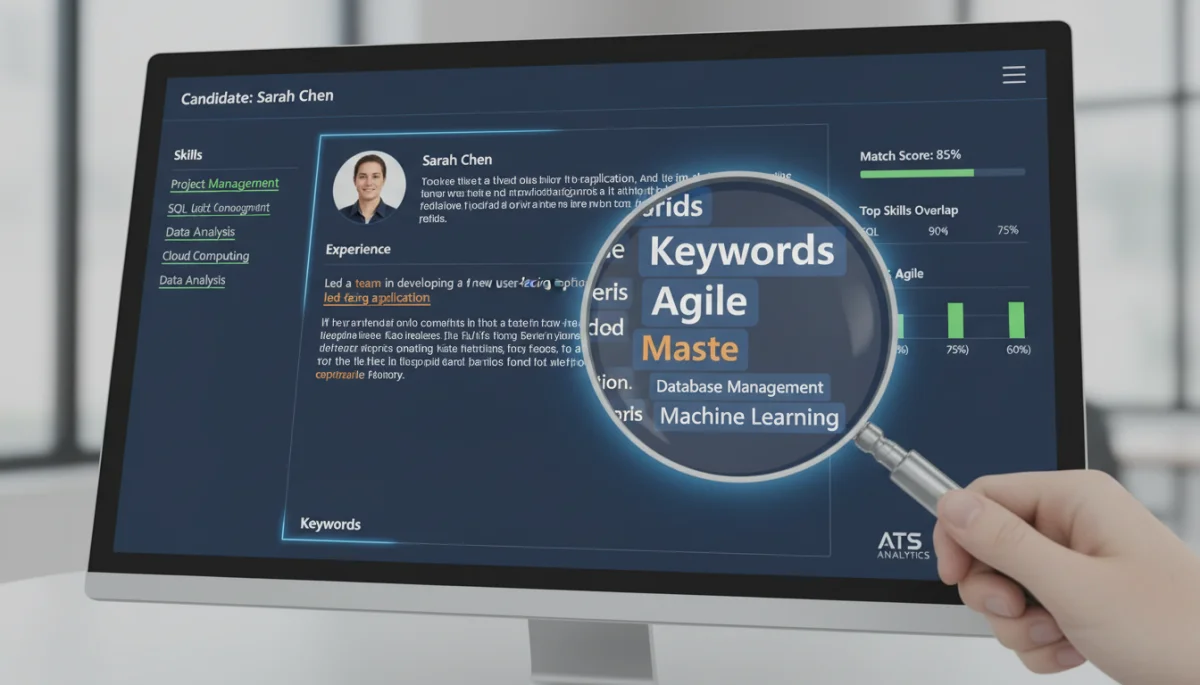
The job market in 2026 is rapidly evolving, driven by technological advancements, shifting economic paradigms, and a renewed focus on specific skill sets. Traditional resume formats, while still holding some value, are increasingly being superseded by documents optimized for Applicant Tracking Systems (ATS). These systems are designed to parse, filter, and rank resumes based on keywords, formatting, and relevance to the job description.
The Rise of AI in Recruitment
Artificial intelligence is no longer a futuristic concept in hiring; it’s a present reality. AI-powered tools are now capable of analyzing resumes for much more than just keywords. They can assess soft skills through textual analysis, predict job performance based on past roles, and even identify cultural fit. This means your resume needs to be more than a list of accomplishments; it needs to tell a compelling story that resonates with both algorithms and hiring managers.
Anúncios
- Keyword Optimization: Beyond exact matches, AI can infer related skills and experiences.
- Contextual Understanding: Systems are getting smarter at understanding the context of your achievements.
- Bias Mitigation: Efforts are being made to reduce algorithmic bias, making fair representation crucial.
Preparing for this landscape involves a strategic approach to resume building. It requires a deep understanding of what these systems look for and how to present your qualifications in a way that is both machine-readable and human-engaging. Ignoring these trends could mean your resume gets overlooked, regardless of your qualifications. Therefore, adapting your resume for 2026 is not just an option, but a necessity for career progression.
In conclusion, the 2026 job market demands a sophisticated resume strategy that acknowledges the role of automated systems while still appealing to human decision-makers. Understanding these dynamics is the first step towards creating a truly effective resume.
Section 1: The Optimized Contact Information and Professional Summary
Your contact information and professional summary are often the first elements an ATS scans, and they set the tone for your entire application. In 2026, this section needs to be meticulously crafted for clarity, keyword density, and immediate impact. It’s no longer just about listing your name and number; it’s about signaling your professional brand from the outset.
Streamlining Contact Details
Ensure your contact information is easy to find and parse. Use standard fonts and avoid complex graphics that can confuse ATS. Include your full name, phone number, professional email address, and a link to your LinkedIn profile. Consider including a personal portfolio link if applicable to your industry.
- Professional Email: Use a simple, professional email address.
- LinkedIn Profile: Ensure your LinkedIn is up-to-date and consistent with your resume.
- Portfolio Link: For creative or technical roles, a clean, functional portfolio link is essential.
Crafting an ATS-Friendly Professional Summary
The professional summary, or objective statement, has evolved. In 2026, it should be a concise, keyword-rich paragraph (3-5 sentences) that highlights your most relevant skills, experience, and career goals. Tailor this summary for each application, incorporating keywords directly from the job description. Think of it as your elevator pitch to both the ATS and the hiring manager.
This section is crucial for immediately conveying your value proposition. It should answer the question: ‘Why am I the best candidate for this specific role?’ without being overly generic. Use strong action verbs and quantify achievements where possible, even in this brief overview. A well-crafted summary can significantly increase your resume’s visibility within automated systems.
Ultimately, an optimized contact and summary section acts as a powerful introduction, ensuring that both automated systems and human eyes quickly grasp your core competencies and professional identity. It’s about making a strong first impression that encourages further review.
Section 2: The Dynamic Skills Section
The skills section is arguably the most critical component for ATS in 2026. It’s where these systems often perform their initial matching and filtering. A dynamic skills section goes beyond a simple list; it categorizes and prioritizes your abilities to align perfectly with job requirements, making your resume highly searchable and relevant.
Categorizing Your Competencies
Instead of a single, monolithic list, break down your skills into logical categories. This could include ‘Technical Skills,’ ‘Soft Skills,’ ‘Language Skills,’ and ‘Industry-Specific Tools.’ This categorization helps ATS accurately identify and rank your diverse capabilities. It also provides a clear overview for human recruiters, allowing them to quickly grasp your full skill set.
- Technical Skills: Programming languages, software proficiency, data analysis tools.
- Soft Skills: Communication, leadership, problem-solving, adaptability.
- Industry-Specific Tools: CRM systems, specific design software, laboratory equipment.
Keywords and Skill Variants
Integrate keywords directly from job descriptions, but also consider common synonyms and related terms. ATS are becoming more sophisticated, but explicit keyword matching remains vital. For example, if a job asks for ‘project management,’ also include ‘PMP certified’ or ‘Scrum Master’ if applicable. This broadens your keyword net without cluttering your resume.
Furthermore, consider adding a proficiency level for certain skills (e.g., ‘Fluent in Spanish,’ ‘Advanced Excel,’ ‘Proficient in Python’). This adds valuable context for both automated systems and human reviewers, providing a clearer picture of your capabilities. A well-structured and keyword-rich skills section is your direct communication channel with the ATS, significantly increasing your chances of making it to the next stage.
In essence, a dynamic skills section is a powerful tool for demonstrating your suitability for a role. By categorizing, optimizing with keywords, and indicating proficiency, you create a highly effective and searchable representation of your abilities for the 2026 job market.
Section 3: Quantifiable Experience and Achievements
Your experience section in 2026 must do more than list past jobs; it needs to showcase quantifiable achievements that resonate with both ATS and human recruiters. Automated systems are increasingly capable of identifying metrics and impact, making strong, results-oriented bullet points crucial for standing out.
Action Verbs and Metrics
Every bullet point under your experience should start with a strong action verb (e.g., ‘Managed,’ ‘Developed,’ ‘Implemented,’ ‘Led’). Follow this with a description of your responsibility and, most importantly, the quantifiable outcome. For example, instead of ‘Responsible for sales,’ write ‘Increased quarterly sales by 15% through strategic client engagement and product promotion.’
Quantifying your achievements provides concrete evidence of your impact and value. ATS can often extract numerical data, recognizing the scale and scope of your contributions. This also makes your accomplishments more compelling to a human reviewer, demonstrating a clear return on investment.
Aligning Experience with Job Descriptions
Tailor your experience section to each job application. While you shouldn’t fabricate experience, emphasize the roles, responsibilities, and achievements that are most relevant to the specific position you’re applying for. Use keywords from the job description naturally within your bullet points. This helps the ATS make a strong match between your background and the employer’s needs.
Focus on accomplishments that highlight problem-solving, leadership, innovation, and efficiency. Even if your past roles weren’t directly in the desired industry, frame your experience in a way that demonstrates transferable skills and a proactive approach. This strategic presentation of your work history is vital for navigating the competitive 2026 job landscape.
To conclude, a powerful experience section in 2026 is built on action verbs, quantifiable results, and strategic alignment with job descriptions. This approach ensures your professional journey is effectively communicated to both automated systems and hiring managers.
Section 4: Education and Certifications for Future Roles
In 2026, the education and certifications section extends beyond traditional degrees. It’s a critical area for showcasing continuous learning, specialized expertise, and alignment with industry demands, all of which are increasingly valued by automated screening systems and recruiters alike.
Highlighting Relevant Education
List your degrees, institutions, and graduation dates clearly. If you have multiple degrees, prioritize the most relevant or highest level of education. For recent graduates, consider including relevant coursework or academic projects that showcase skills pertinent to the roles you’re targeting. Avoid abbreviations that an ATS might not recognize.
For those with extensive professional experience, your education section can be more concise. However, always ensure accuracy and consistency. If you have an in-progress degree, clearly state the anticipated graduation date. This provides a complete picture of your academic foundation.
Valuing Certifications and Online Courses
The modern workforce places significant emphasis on specialized certifications and online courses. These demonstrate initiative, up-to-date skills, and a commitment to professional development. Include relevant certifications (e.g., Google Analytics, AWS Certified Developer, Project Management Professional) with the issuing body and date of completion.
Online learning platforms like Coursera, edX, and LinkedIn Learning offer valuable courses that can fill skill gaps. If you’ve completed courses directly relevant to the job, list them. This not only adds keywords for ATS but also signals to recruiters that you are proactive in acquiring new knowledge and adapting to industry changes.
In summary, the education and certifications section in 2026 is a dynamic space to demonstrate both your foundational knowledge and your ongoing commitment to professional growth. By carefully selecting and presenting your academic and professional credentials, you enhance your resume’s appeal to both automated systems and human evaluators.
Section 5: Tailored Projects and Portfolio Links
Beyond traditional work experience, showcasing personal projects and providing portfolio links has become a powerful way to demonstrate practical skills and initiative in 2026. This section allows you to highlight relevant work that might not fit neatly into previous employment history, providing tangible evidence of your capabilities to both ATS and human reviewers.
Showcasing Relevant Projects
For many roles, especially in tech, creative fields, and data science, personal projects are invaluable. Briefly describe 2-3 significant projects, outlining your role, the tools used, and the outcomes. Quantify achievements where possible, even in personal endeavors. For example, ‘Developed a Python script that automated data cleaning, reducing processing time by 30%.’
- Project Name: Clear title for easy identification.
- Your Role: Clearly define your contribution.
- Technologies Used: List specific software, languages, or tools.
- Impact/Outcome: Quantify the results of your work.
Integrating Portfolio Links
A well-maintained online portfolio is a must for many professions. Include a clean, direct link to your portfolio website, GitHub repository, Behance profile, or any other platform where your work is showcased. Ensure these links are functional and lead to professional, curated content. This allows recruiters to delve deeper into your practical experience and see your skills in action.
When including portfolio links, ensure the content is easily navigable and highlights your best work that aligns with the target job. Avoid including too many projects; focus on quality over quantity. This section bridges the gap between theoretical skills and practical application, offering a comprehensive view of your abilities that goes beyond what a standard resume can convey.
In conclusion, the projects and portfolio links section is a strategic addition to your 2026 resume, providing concrete examples of your expertise and initiative. It effectively complements your formal experience, giving you a competitive edge in the modern job market.
| Key Resume Section | ATS Optimization Strategy |
|---|---|
| Contact & Summary | Clear, standard format; keyword-rich professional summary. |
| Dynamic Skills | Categorized skills, exact and related keywords, proficiency levels. |
| Quantifiable Experience | Action verbs, measurable achievements, tailored to job descriptions. |
| Projects & Portfolio | Brief project descriptions, functional links, showcase practical skills. |
Frequently Asked Questions About 2026 Resumes
In 2026, ATS use advanced AI to scan resumes for keywords, formatting, and contextual relevance. They rank candidates based on how well their skills and experience match the job description, often filtering out non-compliant resumes before human review.
While traditional formats are still accepted, it’s crucial to optimize them for ATS. This means using clean layouts, standard fonts, and keyword integration. Modern resumes often combine traditional elements with ATS-friendly design for maximum impact.
Soft skills are increasingly vital. While ATS primarily focus on hard skills, AI is evolving to identify soft skills through contextual analysis of your experience. Highlighting communication, leadership, and problem-solving through examples is highly beneficial.
It’s generally advised to avoid graphics, complex headers, or images on resumes submitted to ATS, as they can interfere with parsing. For creative roles, a separate portfolio link is a better way to showcase visual work.
You should update your resume regularly, ideally every 6-12 months, or whenever you gain new skills, complete significant projects, or achieve new milestones. This ensures it’s always current and ready for new opportunities.
Conclusion
Crafting a winning resume in 2026 is an art and a science, demanding a thoughtful approach that balances human readability with automated system compatibility. By focusing on the five must-have sections – optimized contact and summary, dynamic skills, quantifiable experience, relevant education and certifications, and tailored projects – you equip yourself with a powerful tool for career advancement. Embrace these strategies to navigate the evolving job market successfully, ensuring your qualifications are recognized and valued.
