The Pomodoro Technique: Maximizing Focus for 25-Minute Intervals in 2026

Anúncios
The Pomodoro Technique: Maximizing Focus for 25-Minute Intervals in 2026 offers a structured approach to enhance productivity and concentration through strategic time boxing, proving its enduring relevance in today’s fast-paced work environments.
In an era defined by constant digital distractions and an ever-increasing demand for productivity, finding effective strategies to maintain focus has become paramount. One such method that has stood the test of time, and continues to evolve, is The Pomodoro Technique: Maximizing Focus for 25-Minute Intervals in 2026. This simple yet profound time management system, developed by Francesco Cirillo in the late 1980s, offers a refreshing approach to tackling tasks, enhancing concentration, and ultimately, achieving more without succumbing to burnout. But how exactly does this seemingly straightforward method continue to deliver significant results in our complex, interconnected world?
Anúncios
Understanding the core principles of the Pomodoro Technique
The Pomodoro Technique is built on the premise that frequent short breaks can improve mental agility and sustained concentration. It breaks down work into focused, timed intervals, traditionally 25 minutes in length, separated by short breaks. This cyclical pattern is designed to minimize distractions and promote a sense of urgency and accomplishment.
At its heart, the technique encourages individuals to commit to a task for a specific, uninterrupted period, knowing that a brief respite is just around the corner. This structured approach helps combat procrastination and provides a clear framework for managing time. The consistent application of these principles allows for a more disciplined and effective workflow, making it a powerful tool for anyone seeking to optimize their productivity.
The foundational steps for effective implementation
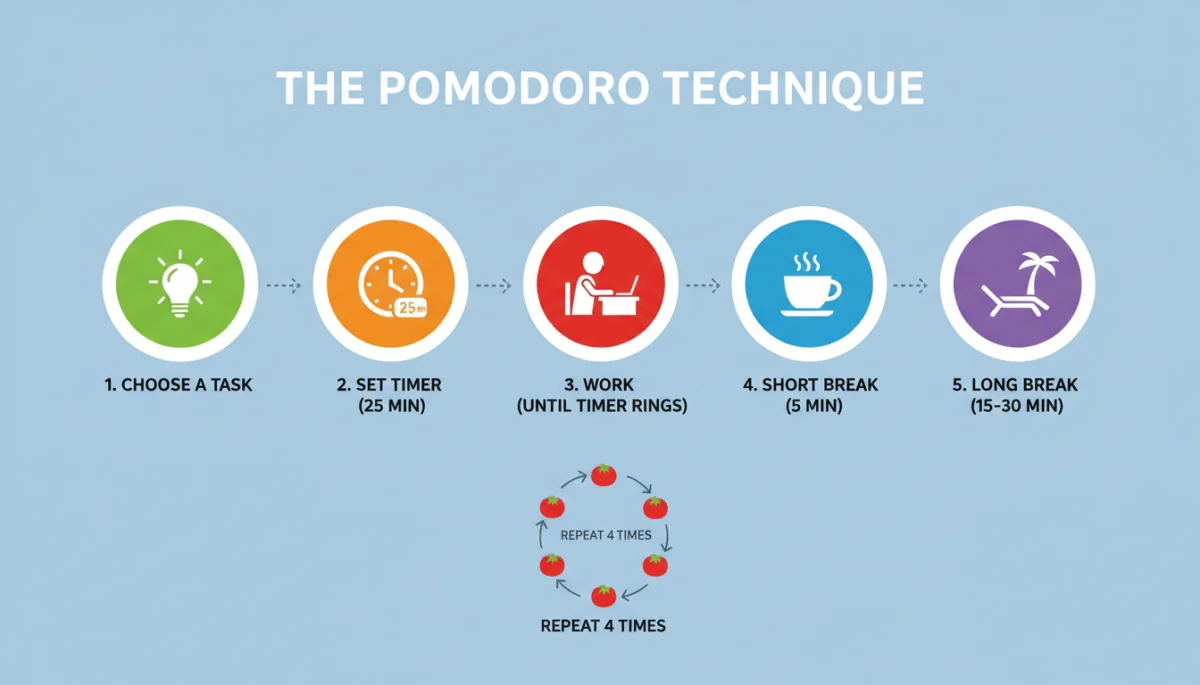
Implementing the Pomodoro Technique involves a series of straightforward steps that, when followed consistently, yield significant benefits. These steps are designed to create a predictable rhythm for your work, ensuring both focused effort and adequate rest periods.
Anúncios
- Choose a task: Select a single task to work on. This commitment to one item helps eliminate multitasking and promotes deep work.
- Set a timer: Traditionally, a tomato-shaped kitchen timer is used, hence the name ‘Pomodoro.’ Set it for 25 minutes.
- Work with focus: Concentrate solely on the chosen task until the timer rings. Resist the urge to check emails or social media.
- Take a short break: Once the timer goes off, take a 5-minute break. Stretch, walk around, or grab a drink.
- Take a longer break: After every four ‘pomodoros’ (25-minute work intervals), take a longer break, typically 15-30 minutes.
By adhering to these steps, individuals can cultivate a habit of intense focus followed by restorative breaks, preventing mental fatigue and sustaining high levels of productivity throughout the day. This systematic approach transforms how tasks are perceived and executed, leading to a more efficient and less stressful work experience.
Adapting the Pomodoro Technique for modern work environments in 2026
While the core principles of the Pomodoro Technique remain timeless, its application in 2026 often requires adaptation to suit diverse modern work environments. The traditional 25-minute interval might not be universally optimal, especially for tasks requiring longer periods of uninterrupted concentration or for roles with frequent, unpredictable interruptions. Modern adaptations focus on flexibility without compromising the technique’s fundamental benefits.
Many professionals today customize their ‘pomodoro’ length to align with their specific tasks and personal concentration spans. Some might opt for 45-minute work blocks with 10-minute breaks, while others in highly collaborative environments might use shorter, more frequent intervals to accommodate team interactions. The key is to find a rhythm that maximizes individual focus and integrates seamlessly with team dynamics and project requirements.
Leveraging digital tools and smart integrations
The digital landscape of 2026 offers a plethora of tools that can enhance the Pomodoro Technique. Dedicated Pomodoro apps, browser extensions, and even smart home integrations can automate timer settings, track progress, and minimize digital distractions. These tools often come with features like customizable interval lengths, integrated task lists, and analytical dashboards that provide insights into productivity patterns.
- Customizable timers: Digital timers allow users to easily adjust work and break durations to suit their individual needs.
- Distraction blockers: Many apps integrate with website and app blockers, creating a truly focused work environment during pomodoro sessions.
- Progress tracking: Digital tools often provide visual representations of completed pomodoros, offering a sense of accomplishment and motivation.
- Seamless integration: Some tools integrate with calendar apps and project management software, streamlining task scheduling and execution.
These technological advancements make it easier than ever to implement and maintain the Pomodoro Technique, transforming it from a simple timer-based method into a comprehensive productivity system tailored for the modern professional. The ability to track and analyze work patterns also allows for continuous improvement and optimization of the technique.
Overcoming common challenges and distractions
Even with a structured approach like the Pomodoro Technique, challenges and distractions are inevitable. In 2026, the pervasive nature of digital communication and the blurring lines between work and personal life present unique hurdles. Effectively overcoming these requires proactive strategies and consistent self-discipline.
One of the most significant distractions comes from digital notifications. Emails, instant messages, and social media alerts can quickly derail a focused work session. A crucial step is to minimize these interruptions by turning off notifications during pomodoro intervals or using dedicated ‘do not disturb’ modes. Communicating your work schedule to colleagues and family can also help set boundaries and reduce unplanned interruptions.
Strategies for maintaining focus during pomodoro sessions
Maintaining unwavering focus for 25 minutes can be difficult, especially when dealing with complex tasks or external pressures. Several strategies can help reinforce concentration and keep distractions at bay.
- Pre-plan your tasks: Before starting a pomodoro, clearly define what you will accomplish. This clarity helps maintain direction and prevents aimless wandering.
- Eliminate external distractions: Find a quiet workspace, close unnecessary tabs, and inform others of your focus time.
- Manage internal distractions: If an unrelated thought or task comes to mind, quickly jot it down on a ‘distraction sheet’ and return to your current work. Address it during a break.
- Practice mindfulness: Briefly centering yourself before a pomodoro can help clear your mind and prepare for focused work.
By implementing these strategies, you can create an environment conducive to deep work and significantly enhance the effectiveness of each pomodoro session. The goal is not just to work for 25 minutes, but to work productively and without interruption for that duration.
The psychological benefits of structured work intervals
Beyond mere productivity, the Pomodoro Technique offers profound psychological benefits that contribute to overall well-being and job satisfaction. The structured nature of work intervals and breaks helps reduce mental fatigue, combat burnout, and foster a healthier relationship with work. This rhythm promotes a sustainable pace, preventing the common trap of overworking.
The clear start and end times for each work block provide a sense of accomplishment and control. This psychological aspect is crucial in reducing stress and anxiety often associated with endless to-do lists. Knowing that a break is scheduled allows the brain to fully engage during work periods, as it anticipates a period of rest and rejuvenation. This balance is essential for long-term cognitive performance and emotional resilience.
Reducing burnout and enhancing job satisfaction
One of the most significant advantages of the Pomodoro Technique is its ability to mitigate burnout. By enforcing regular breaks, the technique prevents prolonged periods of intense concentration that can lead to mental exhaustion. These breaks allow for mental decompression, helping to reset focus and prevent cognitive overload.
- Prevents mental fatigue: Short, frequent breaks give the brain time to rest and consolidate information, improving overall cognitive function.
- Boosts motivation: Completing small, timed tasks provides a continuous stream of small victories, reinforcing motivation and a sense of progress.
- Improves work-life balance: By defining clear work periods, the technique helps create a psychological boundary between work and personal time.
- Reduces stress: The structured approach minimizes feelings of overwhelm, allowing for a more calm and controlled work experience.
Ultimately, by integrating these psychological benefits, the Pomodoro Technique transforms the work experience from a daunting marathon into a series of manageable sprints, leading to greater job satisfaction and a more balanced lifestyle. It teaches us the importance of working smarter, not just harder.
Integrating the Pomodoro Technique with other productivity systems
The versatility of the Pomodoro Technique allows it to be seamlessly integrated with various other productivity systems, creating a synergistic effect that amplifies overall efficiency. Whether you subscribe to Getting Things Done (GTD), Kanban, or Agile methodologies, incorporating pomodoros can provide a crucial layer of focused execution within these broader frameworks.
For instance, within a GTD framework, once tasks are identified and organized, the Pomodoro Technique can be used to execute them in focused bursts. Instead of feeling overwhelmed by a long list, you can commit to tackling specific items during your 25-minute intervals. Similarly, for Kanban users, each card on the board can represent a task to be completed within one or more pomodoros, providing a measurable way to advance through workflows.
Combining with task management and goal setting
The combination of the Pomodoro Technique with robust task management and goal setting practices can create a powerful engine for achieving objectives. By breaking down larger goals into smaller, actionable tasks, and then applying pomodoros to each, the path to accomplishment becomes clearer and more manageable.
- Task prioritization: Use your task management system to prioritize tasks, then apply pomodoros to the most critical items first.
- Goal alignment: Ensure that the tasks you’re working on during your pomodoros directly contribute to your larger goals, providing a sense of purpose.
- Batching similar tasks: Group similar small tasks together to be completed within a single pomodoro, improving efficiency.
- Review and adapt: Regularly review your completed pomodoros against your goals, making adjustments as needed to optimize your strategy.
This integration ensures that your focused work periods are always directed towards meaningful progress, preventing busywork and keeping you aligned with your overarching objectives. The Pomodoro Technique becomes not just a time management tool, but a strategic enabler for personal and professional growth.
Future trends and evolution of the Pomodoro Technique
As technology continues to advance and work culture evolves, the Pomodoro Technique is also seeing new adaptations and interpretations in 2026. The increasing prevalence of remote work, hybrid models, and AI-driven tools means that time management strategies must become even more flexible and intelligent. The future of the Pomodoro Technique lies in its ability to integrate with these emerging trends, offering even more personalized and context-aware productivity solutions.
One significant trend is the rise of AI-powered productivity assistants that can suggest optimal pomodoro intervals based on individual work patterns, cognitive load, and even biometric data. These intelligent systems could analyze a user’s focus levels and suggest when to take a break or when to extend a work session, moving beyond a one-size-fits-all approach. The technique will likely become more dynamic, adjusting to the user’s real-time needs rather than rigid schedules.
Personalized productivity and neuro-adaptive approaches
The concept of personalized productivity is gaining traction, and the Pomodoro Technique is well-positioned to benefit from this. Future iterations may involve neuro-adaptive systems that monitor brain activity to determine peak focus times and customize pomodoro cycles accordingly. This could lead to highly optimized work sessions tailored to an individual’s unique cognitive rhythms.
- AI-driven scheduling: AI can analyze task complexity and personal energy levels to suggest optimal pomodoro lengths and break times.
- Biometric feedback: Wearable devices could provide real-time data on stress and focus, prompting users to adjust their work-rest cycles.
- Gamification: Integrating game-like elements can make the Pomodoro Technique more engaging and motivate consistent use.
- Collaborative pomodoros: Tools designed for teams to work in synchronized pomodoro sessions could enhance group productivity and flow.
These future trends suggest an exciting evolution for the Pomodoro Technique, transforming it into an even more powerful and intelligent tool for maximizing focus and productivity. By embracing technology and personalized approaches, the technique will remain relevant and effective for generations to come, helping individuals navigate the complexities of modern work life.
| Key Aspect | Brief Description |
|---|---|
| Core Structure | 25-minute focused work intervals followed by short breaks. |
| Modern Adaptation | Customizable intervals and digital tools enhance flexibility and tracking. |
| Psychological Benefits | Reduces burnout, improves focus, and fosters a healthier work relationship. |
| Future Trends | AI-driven personalization and neuro-adaptive approaches for optimal flow. |
Frequently asked questions about the Pomodoro Technique
While the traditional Pomodoro interval is 25 minutes, the ideal length can vary. Many individuals find success by experimenting with different durations, such as 45-minute work blocks or even shorter 15-minute bursts, to find what best suits their concentration span and the nature of their tasks. Flexibility is key to optimizing the technique.
If an interruption occurs, quickly decide if it’s urgent. If not, jot down the distraction on a separate note and return to your task. If it’s urgent and unavoidable, you might ‘cancel’ the current Pomodoro and start a new one after addressing the interruption. The goal is to minimize disruptions to maintain focus.
Absolutely. The Pomodoro Technique is highly effective for creative tasks. The structured intervals can help overcome creative blocks by providing a dedicated time for brainstorming and execution, while breaks allow for mental rejuvenation and new perspectives. It helps in breaking down large creative projects into manageable segments.
Short breaks (5 minutes) should involve activities that allow your mind to briefly disengage from work, like stretching, walking, or getting a drink. Longer breaks (15-30 minutes) after four Pomodoros can be used for more substantial activities, such as a quick meal, a short walk outside, or light exercise, to fully recharge.
Yes, the Pomodoro Technique can be adapted for team environments. Teams can agree on synchronized Pomodoro cycles to facilitate collaborative work during specific intervals and ensure focused individual work during others. Clear communication about these cycles helps manage expectations and reduces interruptions, fostering collective productivity.
Conclusion
In a world increasingly vying for our attention, The Pomodoro Technique: Maximizing Focus for 25-Minute Intervals in 2026 stands as a resilient and adaptable framework for achieving unparalleled productivity and mental clarity. Its enduring appeal lies in its simplicity, yet its profound impact on focus, task management, and overall well-being. By embracing its core principles and adapting them to modern challenges, individuals can cultivate a more disciplined, less stressful, and ultimately, more rewarding work life. The technique is not merely about managing time; it’s about mastering attention, fostering sustainable work habits, and unlocking your full potential in an ever-evolving professional landscape.
