Charity Scams: Verifying Non-Profits Before Donating – 2026 Guide

Anúncios
Verifying non-profits in 2026 is crucial for ethical giving, requiring donors to proactively research organizations to combat charity scams and ensure their contributions reach legitimate causes effectively.
In an increasingly complex digital landscape, ensuring your hard-earned money reaches legitimate causes is paramount. This guide on Charity Scams: Verifying Non-Profits Before Donating – A 2026 Guide to Ethical Giving offers practical insights to protect your generosity and make a genuine impact.
Anúncios
Understanding the Evolving Threat of Charity Scams in 2026
The digital age, while offering unprecedented connectivity and ease of donation, has also unfortunately paved the way for more sophisticated charity scams. In 2026, these fraudulent schemes are not only more numerous but also more adept at mimicking legitimate organizations, making donor vigilance more critical than ever.
Scammers exploit various channels, from elaborate phishing emails and fake social media campaigns to deceptively professional-looking websites. They often capitalize on current events, natural disasters, or popular social causes, creating a sense of urgency that can bypass a donor’s usual caution. Understanding the common tactics they employ is the first step in safeguarding your charitable contributions.
Common Scam Tactics
Fraudsters frequently use emotional appeals, high-pressure tactics, and even impersonation to solicit funds. They might create fake profiles, send unsolicited messages, or cold-call potential donors, all while pretending to represent well-known or newly formed charitable initiatives.
Anúncios
- Phishing Emails: Emails designed to look like they are from legitimate charities, often containing malicious links or requests for personal information.
- Fake Websites: Websites that closely resemble official charity sites but are designed to steal donations and personal data.
- Social Media Impersonation: Scammers creating fake social media accounts or pages to solicit donations under the guise of a real charity.
- Urgency and Pressure: Creating a narrative of immediate need to rush donors into contributing without proper verification.
The landscape of charity scams is constantly shifting, with new methods emerging as technology evolves. Staying informed about these evolving threats is crucial for any conscientious donor. Recognizing the signs of a scam early can prevent financial loss and ensure that your charitable intent is not exploited.
The Importance of Due Diligence Before Donating
Donating to a charity is an act of kindness, but without proper due diligence, that kindness can inadvertently fuel fraudulent operations. Performing thorough research before you give ensures that your money goes to organizations that genuinely work towards their stated missions, rather than into the pockets of scammers. This process is not about mistrust, but about responsible and effective philanthropy.
In 2026, with countless organizations vying for attention, it’s easy to feel overwhelmed. However, a systematic approach to verifying non-profits can simplify this task. This proactive stance not only protects your finances but also helps to bolster the credibility of the entire charitable sector, making it harder for fraudulent entities to thrive.
Key Verification Steps
Before making any donation, big or small, take the time to investigate the organization. Look beyond the initial appeal and delve into their operational transparency and financial accountability.
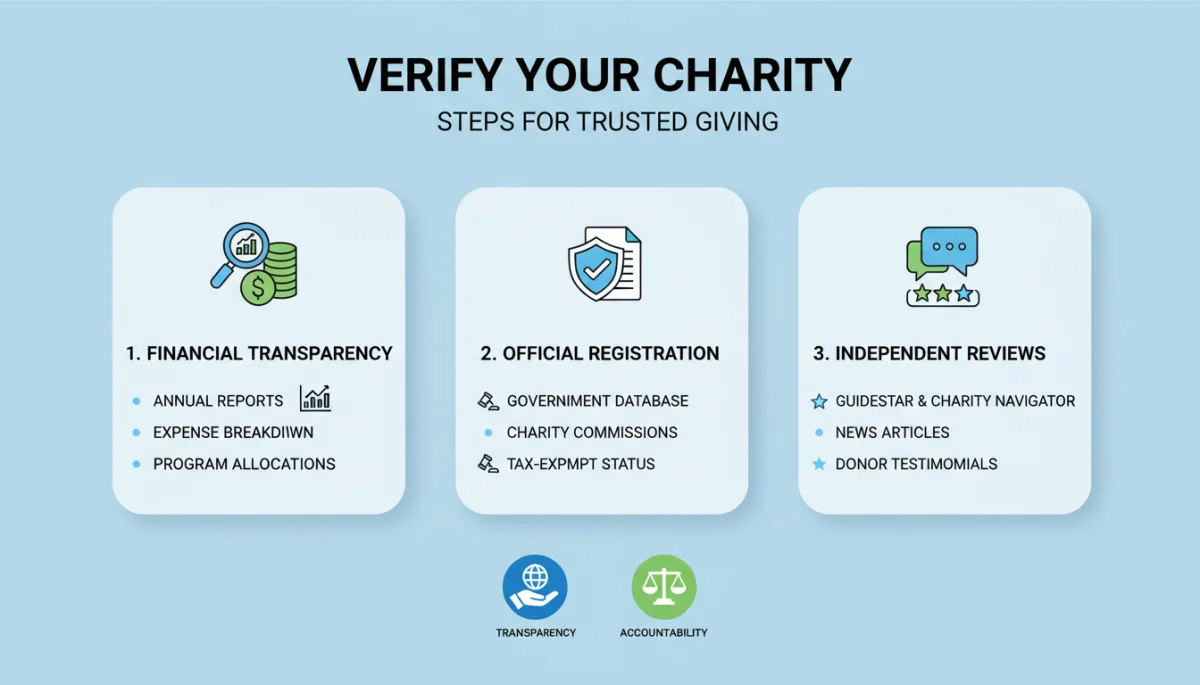
- Check Registration Status: Verify if the charity is legally registered with the appropriate government bodies.
- Review Financial Statements: Examine how the organization uses its funds, looking for a reasonable percentage allocated to programs versus administrative costs.
- Read Independent Reviews: Consult charity watchdog sites and news articles for assessments of the organization’s reputation and effectiveness.
By taking these steps, you contribute to a more transparent and trustworthy charitable environment. Due diligence transforms a simple act of giving into an informed decision, maximizing the positive impact of your generosity.
Utilizing Digital Tools and Resources for Non-Profit Verification
The digital era has provided an array of powerful tools and resources that significantly simplify the process of verifying non-profits. In 2026, leveraging these online platforms is an indispensable part of ethical giving. These resources offer transparency into an organization’s operations, financial health, and overall legitimacy, empowering donors with critical information.
From government databases to independent charity evaluators, these digital platforms provide a wealth of data that would have been inaccessible just a few years ago. Learning to navigate and interpret the information found on these sites is a vital skill for any modern donor committed to avoiding charity scams and supporting genuine causes.
Essential Online Verification Platforms
Several reputable websites specialize in providing detailed information and ratings for non-profit organizations. These platforms are often the first stop for donors seeking to verify a charity’s authenticity and effectiveness.
- Charity Navigator: Offers in-depth financial data, accountability, and transparency ratings for thousands of charities.
- GuideStar (now Candid): Provides comprehensive profiles on over 2.7 million non-profits, including financial documents and program details.
- BBB Wise Giving Alliance: Evaluates charities against 20 standards of charity accountability and provides reports.
- IRS Tax Exempt Organization Search: Confirms an organization’s 501(c)(3) status, ensuring donations are tax-deductible.
These tools are designed to give donors peace of mind by offering objective assessments. Regularly consulting these resources can significantly reduce the risk of falling victim to scams and ensures your donations are channeled to reputable organizations. The power of informed giving lies in utilizing these readily available digital assets.
Recognizing Red Flags: What to Look Out For
Even with the best intentions, discerning between a legitimate charity and a scam can be challenging. However, certain warning signs, or ‘red flags,’ can indicate that an organization might not be trustworthy. Being aware of these indicators is crucial for protecting your donations and ensuring your generosity is not exploited by fraudulent schemes. A keen eye for these details can save you from becoming a victim of charity scams.
Scammers often rely on creating a sense of urgency or emotional manipulation to bypass critical thinking. They might pressure you for an immediate donation, or refuse to provide clear, verifiable information about their operations. Learning to identify these tactics is a key part of responsible giving in 2026.
Common Red Flags to Heed
Be wary of any organization that exhibits these characteristics. They are often tell-tale signs of a potential scam or a poorly managed non-profit that won’t effectively use your funds.
- High-Pressure Tactics: Any charity that demands immediate donations or employs aggressive solicitation methods.
- Vague Information: Lack of clear details about their mission, programs, or how donations are used.
- Unsolicited Requests: Receiving unexpected calls, emails, or messages from charities you’ve never interacted with.
- Demands for Cash or Wire Transfers: Legitimate charities rarely ask for donations via untraceable methods like cash, gift cards, or wire transfers.
- Grammar and Spelling Errors: Unprofessional communication can be a sign of a hastily constructed fraudulent operation.
By recognizing these red flags, you can empower yourself to make more informed decisions about where to donate. Trust your instincts; if something feels off, it’s always best to investigate further or choose another organization.
Donating Safely: Best Practices for Ethical Giving in 2026
Beyond verifying a non-profit’s legitimacy, adopting best practices for safe donation is equally important. Ethical giving in 2026 involves not just choosing the right charity but also employing secure methods for your contributions. This comprehensive approach minimizes your risk of exposure to fraud and ensures your personal and financial information remains protected.
The way you donate can be as critical as the charity you choose. With the proliferation of online transactions, understanding secure payment methods and privacy settings is paramount. These practices contribute to a more secure and impactful charitable experience, safeguarding both your resources and your peace of mind.
Secure Donation Methods
Always opt for donation methods that offer protection and traceability. Avoid any method that feels insecure or unconventional, as these are often favored by scammers.
- Official Website Donations: Donate directly through the charity’s secure, official website (look for ‘https’ in the URL).
- Credit Card Payments: Credit cards offer fraud protection and are generally safer than debit cards or bank transfers for online donations.
- Checks: Sending a check directly to the charity’s verified mailing address provides a paper trail.
Additionally, be mindful of your privacy. Review the charity’s privacy policy to understand how they handle your personal data. Opt out of sharing your information if possible, to reduce the risk of your details falling into the wrong hands. By combining thorough verification with secure donation practices, you can engage in ethical giving with confidence.
What to Do if You Suspect a Charity Scam
Despite your best efforts, you might encounter a situation where you suspect a charity scam. Knowing the appropriate steps to take in such circumstances is crucial, not only for your own protection but also to help prevent others from falling victim. Reporting suspected fraud is a vital part of maintaining the integrity of the charitable sector and combating criminal activity.
Acting swiftly and reporting your suspicions to the relevant authorities can make a significant difference. Your actions can lead to investigations, warnings, and ultimately, the shutdown of fraudulent operations, protecting countless potential donors from financial loss and emotional distress.
Reporting Suspected Fraud
There are several avenues for reporting charity scams, each playing a role in the broader effort to combat fraud. Do not hesitate to use these resources if you believe you’ve encountered a scam.
- Federal Trade Commission (FTC): Report scams to the FTC at ReportFraud.ftc.gov.
- State Attorney General’s Office: Your state’s Attorney General often has a consumer protection division that handles charity fraud.
- IRS: If the scam involves a fake charity claiming tax-exempt status, report it to the IRS.
- Local Law Enforcement: For more severe cases involving significant financial loss, contact your local police department.
When reporting, provide as much detail as possible, including names, contact information, website addresses, and any communications you’ve received. Even if you haven’t lost money, reporting a suspected scam helps authorities track patterns and prevent future incidents. Your vigilance is a powerful tool in the fight against charity fraud.
The Future of Ethical Giving: Trends and Technologies in 2026
As we look towards the future, the landscape of ethical giving is continuously evolving, shaped by technological advancements and changing donor expectations. In 2026, new trends and technologies are emerging that promise to enhance transparency, streamline verification processes, and empower donors even further in their quest for impactful giving. These innovations are set to redefine how we approach charity and combat scams.
Blockchain technology, artificial intelligence, and enhanced data analytics are at the forefront of these changes. These tools offer unprecedented opportunities for charities to demonstrate their accountability and for donors to gain deeper insights into where their money goes. Understanding these emerging trends is key to navigating the future of ethical philanthropy.
Emerging Technologies for Transparency
Future technologies are poised to offer more robust solutions for verifying non-profits and ensuring accountability, making ethical giving more accessible and secure.
- Blockchain for Traceability: Distributed ledger technology can provide immutable records of donations and how funds are spent, offering unparalleled transparency.
- AI-Powered Verification: Artificial intelligence can analyze vast amounts of data to identify patterns of fraudulent activity or inconsistencies in charity reporting, flagging potential scams faster.
- Enhanced Data Analytics: Sophisticated analytics tools will allow donors to access and interpret complex financial and impact data from charities more easily.
These technological advancements, combined with continued vigilance from donors, will create a more secure and trustworthy environment for charitable giving. The future of ethical giving in 2026 and beyond promises a world where every donation can be made with greater confidence and a clearer understanding of its impact, significantly reducing the prevalence of charity scams.
| Key Verification Step | Brief Description |
|---|---|
| Check Registration | Confirm legal status with government and watchdog sites. |
| Review Financials | Examine how donations are spent and operational efficiency. |
| Utilize Watchdog Sites | Consult Charity Navigator, GuideStar, BBB for ratings and reports. |
| Spot Red Flags | Beware of pressure tactics, vague info, and cash demands. |
Frequently Asked Questions About Ethical Giving
To quickly verify a charity, use reputable online platforms like Charity Navigator, GuideStar, or the BBB Wise Giving Alliance. These sites provide ratings, financial transparency, and legal registration status, offering immediate insights into an organization’s credibility.
Common signs include high-pressure tactics, requests for donations via untraceable methods like gift cards or wire transfers, vague information about their mission, and unsolicited contact from unknown organizations. Always be suspicious of promises that sound too good to be true.
Donating through social media requires extra caution. Always verify the fundraiser’s legitimacy and ensure the link directs to the official charity’s website. Scammers often create fake profiles or campaigns on social media platforms, so direct verification is essential.
To ensure your donation is tax-deductible, verify that the charity has 501(c)(3) status with the IRS. You can use the IRS Tax Exempt Organization Search tool to confirm their status. Always keep records of your donations for tax purposes.
If you suspect you’ve been scammed, report it immediately to the Federal Trade Commission (FTC) at ReportFraud.ftc.gov and your state’s Attorney General. If you lost money, also contact your bank or credit card company and local law enforcement.
Conclusion
Navigating the world of charitable giving in 2026 demands both generosity and vigilance. By understanding the evolving nature of charity scams, diligently utilizing available digital tools for verification, recognizing critical red flags, and adopting secure donation practices, you can ensure your contributions make a genuine and positive impact. Ethical giving is a powerful force for good, and by staying informed and proactive, donors can effectively combat fraud and support the causes that truly matter.
