Online Security: 7 Steps to Avoid Cyber Scams in 2026
Anúncios
Understanding effective strategies for online security 2026 is paramount for consumers as cyber threats continue to evolve, requiring proactive measures to safeguard personal information and financial assets from sophisticated cyber scams.
In an increasingly digital world, where every click and swipe carries potential risks, safeguarding your personal information is more critical than ever. As we move further into 2026, the landscape of cyber threats continues to evolve, making comprehensive online security 2026 measures an absolute necessity for every consumer. This article will guide you through seven essential steps to help you navigate the digital realm safely, protecting yourself from common cyber scams that target unsuspecting individuals.
Anúncios
Understanding the Evolving Threat Landscape in 2026
The digital world of 2026 presents a complex web of opportunities and challenges. While technology enhances our daily lives, it also opens new avenues for cybercriminals to exploit vulnerabilities. Scammers are becoming increasingly sophisticated, leveraging artificial intelligence and advanced social engineering tactics to deceive consumers.
Understanding these evolving threats is the first step in building a robust defense. Cybercriminals no longer rely solely on obvious phishing emails; they now employ deepfakes, AI-generated voices, and highly personalized attack vectors that can be incredibly convincing. These tactics aim to bypass traditional security measures and exploit human trust.
The Rise of AI-Powered Scams
Artificial intelligence is a double-edged sword. While it aids in developing advanced security solutions, it also empowers scammers to create more believable and dangerous schemes. AI can generate convincing fake identities, craft highly personalized phishing messages, and even mimic voices to execute elaborate fraud.
Anúncios
- Deepfake Technology: Used to create fake videos or audio recordings of trusted individuals, often used in CEO fraud or romance scams.
- AI-Generated Phishing: Emails and messages crafted with perfect grammar and context, making them harder to identify as malicious.
- Voice Cloning: Used to impersonate family members or authority figures, often requesting urgent money transfers.
Remaining vigilant and skeptical of unsolicited communications, regardless of how authentic they appear, is crucial. Always verify requests through alternative, trusted channels before acting.
Step 1: Fortify Your Digital Passwords and Authentication
Your passwords are the first line of defense against unauthorized access to your online accounts. In 2026, relying on simple, easily guessable passwords is an open invitation for cybercriminals. Strengthening your password hygiene is non-negotiable for effective online security.
Beyond strong, unique passwords for every account, multi-factor authentication (MFA) has become an indispensable tool. MFA adds an extra layer of security by requiring two or more verification factors to gain access, making it significantly harder for attackers to compromise your accounts, even if they manage to steal your password.
Creating Strong, Unique Passwords
A strong password is typically long, complex, and unique. It should combine uppercase and lowercase letters, numbers, and special characters. Avoid using personal information, common words, or easily predictable patterns.
- Use a Password Manager: These tools generate and securely store complex passwords, eliminating the need to remember them all.
- Avoid Reusing Passwords: A breach on one site shouldn’t compromise all your accounts.
- Regularly Update Passwords: Change your most critical passwords every few months, especially for banking and email.
Implementing a robust password strategy is a fundamental pillar of personal cyber defense. It’s a small effort that yields significant protection against a wide array of cyber threats.
Step 2: Recognize and Avoid Phishing and Social Engineering Tactics
Phishing remains one of the most prevalent and effective cyberattack methods, constantly evolving to trick unsuspecting users. Social engineering, which manipulates individuals into divulging confidential information, often goes hand-in-hand with phishing. In 2026, these tactics are more sophisticated than ever, making vigilance paramount.
Scammers often impersonate legitimate organizations, such as banks, government agencies, or well-known companies, to trick you into clicking malicious links, downloading malware, or revealing sensitive data. Their messages frequently create a sense of urgency, fear, or an enticing offer that seems too good to be true.
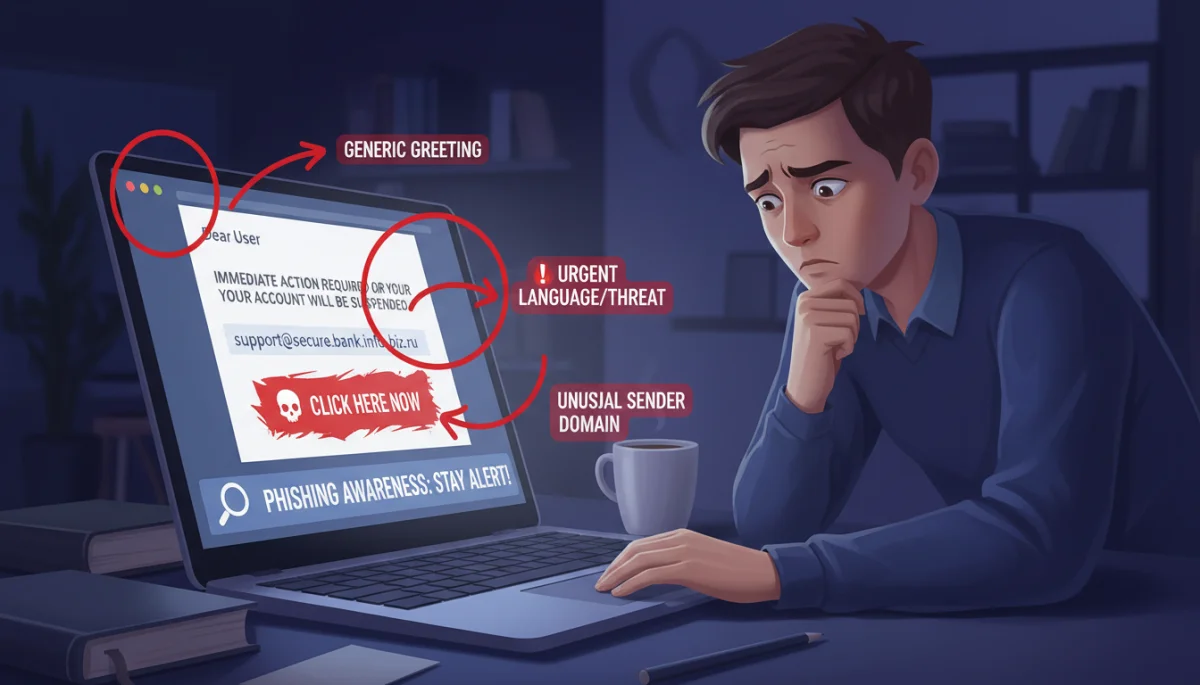
Key Indicators of a Phishing Attempt
Learning to spot the red flags of a phishing attempt can prevent significant financial loss and identity theft. Always pause and scrutinize any suspicious communication.
- Suspicious Sender Address: Check if the email address matches the supposed sender. Often, there are subtle misspellings or different domains.
- Generic Greetings: Legitimate organizations usually address you by name, not a generic ‘Dear Customer.’
- Urgent or Threatening Language: Messages demanding immediate action or threatening account closure are common phishing tactics.
- Poor Grammar and Spelling: While AI is improving this, mistakes can still be a giveaway.
- Unusual Links: Hover over links (without clicking!) to see the actual URL. If it doesn’t match the expected domain, it’s likely malicious.
Educating yourself on these common indicators empowers you to act as your own first line of defense against these pervasive threats. Always err on the side of caution when something feels off.
Step 3: Secure Your Devices and Networks
The devices you use daily—smartphones, tablets, laptops—are gateways to your digital life. Ensuring their security is fundamental to protecting your personal information from cyber threats. Similarly, the networks you connect to can be a source of vulnerability if not properly secured.
Regularly updating your operating systems and applications is not just about getting new features; it’s primarily about patching security vulnerabilities that cybercriminals could exploit. Outdated software is a common entry point for malware and other attacks.
Best Practices for Device and Network Security
Adopting a proactive approach to securing your devices and networks significantly reduces your risk exposure. These practices should be ingrained into your digital routine.
- Keep Software Updated: Enable automatic updates for your operating system, web browser, and all applications.
- Install Antivirus/Anti-Malware: Use reputable security software and keep its definitions updated.
- Use a Firewall: A firewall acts as a barrier between your device and external networks, controlling incoming and outgoing traffic.
- Secure Your Wi-Fi: Use strong, unique passwords for your home Wi-Fi and ensure it’s encrypted (WPA3 is ideal, WPA2 is acceptable). Avoid public Wi-Fi for sensitive transactions.
By diligently applying these security measures, you create a much more resilient environment for your digital activities, making it harder for cybercriminals to gain unauthorized access.
Step 4: Practice Safe Online Shopping and Banking
Online transactions are an integral part of modern life, but they also present prime targets for cyber scammers. Protecting your financial information during online shopping and banking requires a heightened level of awareness and adherence to specific security protocols. Fraudsters constantly devise new ways to intercept your data or trick you into making fraudulent payments.
Always verify the legitimacy of websites before entering any personal or payment information. Look for visual cues that indicate a secure connection and be wary of deals that seem too good to be true, as these are often bait for scams.
Ensuring Secure Financial Transactions
Adopting these practices will significantly enhance the security of your online financial activities, minimizing the risk of falling victim to payment fraud or identity theft.
- Look for HTTPS: Always ensure the website URL begins with ‘https://’ and displays a padlock icon in the browser bar. This indicates an encrypted connection.
- Use Strong Payment Methods: Opt for credit cards or secure payment services like PayPal, which offer greater buyer protection than debit cards or bank transfers.
- Monitor Bank Statements: Regularly review your bank and credit card statements for any unauthorized transactions. Report discrepancies immediately.
- Avoid Public Wi-Fi for Transactions: Public networks are often unsecured, making your data vulnerable to interception.
Being diligent about where and how you conduct online financial transactions is a critical component of maintaining strong online security and protecting your assets.
Step 5: Be Wary of Unsolicited Communications and Offers
A significant portion of cyber scams begins with unsolicited communications, whether through email, text messages, phone calls, or social media. Scammers often leverage these channels to initiate their deceptive schemes, preying on curiosity, urgency, or the desire for a good deal. The goal is always to get you to act impulsively without critical thought.
In 2026, these communications are often highly personalized, thanks to data breaches and advanced targeting. This makes them even more convincing, blurring the lines between legitimate contact and malicious intent. Always question the authenticity of unexpected messages.
Identifying and Handling Suspicious Communications
Developing a skeptical mindset towards unsolicited contacts is a powerful defense mechanism. Here’s how to approach them:
- Verify the Sender: If a message claims to be from a known entity (bank, government, friend), independently verify through official channels, not by replying to the suspicious message.
- Resist Urgency: Scammers often create a sense of urgency to pressure you into immediate action. Take a moment to think and verify.
- Don’t Click Unknown Links: Malicious links can download malware or lead to phishing sites.
- Be Skeptical of Too-Good-To-Be-True Offers: If an offer seems unbelievably generous, it’s almost certainly a scam.
- Never Share Personal Information: Legitimate organizations will rarely ask for sensitive information like passwords or full social security numbers via email or text.
By exercising caution and verifying unexpected communications, you can effectively disarm many common cyber scams before they even have a chance to take root.
Step 6: Understand Data Privacy and Personal Information Sharing
In the digital age, your personal data is a valuable commodity, and its privacy is directly linked to your online security. Every piece of information you share online, whether on social media, through apps, or on websites, can potentially be collected and used by others, including cybercriminals. Understanding how your data is used and controlling its dissemination is crucial.
Many online services require access to personal data to function, but it’s important to be discerning about what you share and with whom. Over-sharing can create a digital footprint that makes you an easier target for identity theft and personalized social engineering attacks.
Managing Your Digital Footprint and Privacy Settings
Taking control of your data privacy involves conscious decisions about your online behavior and proactive management of your privacy settings across various platforms.
- Review Privacy Policies: Understand how companies collect, use, and share your data.
- Adjust Social Media Privacy Settings: Limit who can see your posts and personal information to only trusted contacts.
- Be Selective with App Permissions: Grant apps only the necessary permissions they need to function. Question excessive requests.
- Use Strong Privacy Settings on Browsers: Configure your web browser to block third-party cookies and trackers.
- Think Before You Share: Consider the potential implications before posting personal details, travel plans, or financial information online.
A proactive approach to data privacy is an essential part of a comprehensive online security strategy, minimizing the risk of your personal information being exploited by malicious actors.
Step 7: Know How to Report and Recover from a Cyber Scam
Despite all preventive measures, falling victim to a cyber scam can happen to anyone. The key is to know how to react swiftly and effectively to minimize damage and aid in recovery. A rapid response can often prevent further financial loss and help authorities track down perpetrators.
Reporting a scam not only helps you, but it also contributes to a larger effort to combat cybercrime, providing valuable intelligence to law enforcement and consumer protection agencies. Ignoring the incident only emboldens criminals.
Steps for Reporting and Recovery
Having a clear action plan in case you become a victim of a cyber scam can significantly reduce the potential harm and stress associated with such an event.
- Isolate the Compromised Account: Change passwords immediately for the affected account and any others sharing the same password.
- Contact Your Bank/Credit Card Company: If financial information was compromised, report it immediately to your financial institutions.
- Report to Law Enforcement: File a report with the FBI’s Internet Crime Complaint Center (IC3) or your local police department.
- Notify Relevant Agencies: Report identity theft to the Federal Trade Commission (FTC) and consider placing a fraud alert on your credit report.
- Inform Affected Contacts: If your email or social media was compromised, warn your contacts that they might receive suspicious messages from your account.
Being prepared for the worst-case scenario empowers you to act decisively, significantly improving your chances of recovery and contributing to a safer online environment for everyone.
| Key Security Step | Brief Description |
|---|---|
| Strong Passwords & MFA | Use unique, complex passwords and enable multi-factor authentication for all accounts. |
| Phishing Awareness | Learn to identify red flags in suspicious communications and verify senders independently. |
| Secure Devices & Networks | Keep software updated, use antivirus, and secure your home Wi-Fi to prevent intrusions. |
| Data Privacy Control | Manage privacy settings and be selective about sharing personal information online. |
Frequently Asked Questions About Online Security in 2026
MFA requires two or more verification methods to access an account, such as a password plus a code from your phone. It’s crucial because it adds a significant layer of security, making it much harder for cybercriminals to compromise your accounts even if they have your password.
Look for suspicious sender addresses, generic greetings, urgent or threatening language, poor grammar, and unusual links. Always verify the sender through official channels, never by clicking links in the email itself. AI-generated phishing can be very convincing, so heightened skepticism is key.
Yes, reputable password managers are generally very safe and highly recommended. They encrypt and store your complex, unique passwords, requiring you to remember only one master password. This significantly enhances your overall online security by eliminating password reuse and weak passwords.
Immediately contact your bank or credit card company to report the suspected compromise and monitor your statements for unauthorized activity. Also, change passwords for all affected accounts and consider placing a fraud alert on your credit report with major credit bureaus.
Software updates often include critical security patches that fix vulnerabilities discovered by developers. Cybercriminals actively seek out and exploit these unpatched weaknesses. Keeping your operating systems and applications updated closes these security gaps, protecting your devices from various cyberattacks.
Conclusion
Navigating the digital landscape in 2026 requires a proactive and informed approach to online security. The sophistication of cyber scams continues to grow, but by diligently applying these seven steps—fortifying passwords, recognizing phishing, securing devices, practicing safe online transactions, being wary of unsolicited communications, managing data privacy, and knowing how to report incidents—consumers can significantly enhance their protection. Staying vigilant and continuously educating yourself about emerging threats are your best defenses in the ongoing fight against cybercrime, ensuring a safer and more secure online experience for everyone.
