Subscription Trap: Identify & Cancel Unwanted Recurring Charges by 2026

Anúncios
The subscription trap occurs when consumers are burdened by unwanted recurring charges, making it essential to identify and cancel these services effectively by 2026 for improved financial health.
Anúncios
Are you tired of those mysterious charges appearing on your bank statement every month? The phenomenon known as the subscription trap cancel is becoming increasingly prevalent, costing consumers billions annually. By the end of 2026, understanding how to effectively identify and cancel these unwanted recurring charges will be more crucial than ever for maintaining financial control and peace of mind.
Understanding the modern subscription trap
The digital age has brought unparalleled convenience, but with it, a new financial challenge: the subscription trap. This isn’t just about streaming services; it encompasses a vast array of digital and physical products, from software licenses and online courses to gym memberships and meal kit deliveries. Many consumers find themselves inadvertently enrolled in services they no longer use, or worse, never intended to sign up for in the first place.
Identifying these recurring charges can be a complex task. Companies often employ subtle tactics, such as introductory free trials that automatically convert to paid subscriptions, or bundling services in a way that obscures individual costs. The sheer volume of digital transactions makes it easy for smaller, recurring fees to go unnoticed, slowly eroding your budget. Recognizing the various forms of the subscription trap is the first step toward regaining control over your finances.
Anúncios
The stealthy nature of recurring charges
Many subscriptions are designed to be ‘set it and forget it,’ which is convenient until you forget about them entirely. This stealthy nature means charges can accumulate over months or even years without conscious oversight. Banks and credit card companies may list these charges with vague descriptors, making it difficult to pinpoint the exact service being paid for.
- Free trials that auto-renew into paid subscriptions.
- Bundled services where individual costs are not transparent.
- “Introductory” offers that quietly increase in price.
- Charges from dormant or forgotten accounts.
The modern consumer needs to be vigilant, regularly auditing their financial statements to catch these charges before they become significant drains. The ease of signing up for services with a single click often stands in stark contrast to the often-convoluted process of cancellation, creating a deliberate barrier for consumers trying to escape the trap.
In essence, the subscription trap is a product of convenience and complexity. While subscriptions offer value, their proliferation and opaque billing practices demand a proactive approach from consumers. Understanding this landscape is vital for anyone looking to manage their recurring expenses effectively by 2026.
Strategies for identifying unwanted subscriptions
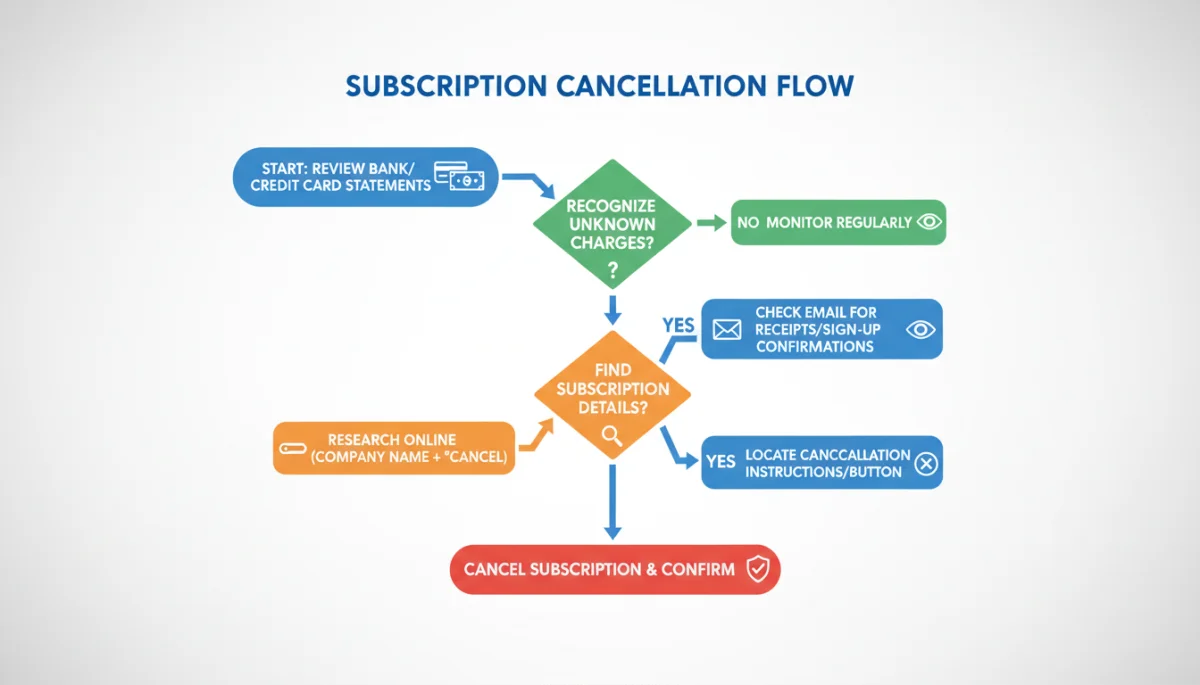
The first step to canceling unwanted recurring charges is to identify them. This requires a systematic approach to reviewing your financial records. Many people are surprised by how many subscriptions they are actually paying for once they conduct a thorough audit. It’s not uncommon to find services you signed up for years ago and completely forgot about.
Start by compiling a comprehensive list of all your recurring payments. This includes not only direct debits but also credit card charges and PayPal transactions. Look for any unfamiliar names or amounts that don’t immediately ring a bell. Often, these are the stealthy subscriptions that have been quietly draining your account.
Conducting a financial audit
A detailed review of your bank and credit card statements is paramount. Go back at least 12-24 months to capture annual subscriptions or those that bill less frequently. Many financial institutions now offer tools to categorize spending, which can help highlight recurring payments.
- Review bank statements for all direct debits and recurring transfers.
- Examine credit card statements for monthly or annual charges.
- Check PayPal or other digital wallet transaction histories.
- Look for charges with ambiguous descriptions.
Beyond financial statements, check your email accounts. Many subscription services send confirmation emails upon sign-up, renewal notices, or monthly statements. Searching your inbox for keywords like “subscription,” “renewal,” “invoice,” or “membership” can uncover hidden charges. These emails often contain valuable information about the service provider and cancellation instructions.
Once identified, categorize these subscriptions. Separate the essential services (like internet or utilities) from discretionary ones (streaming, apps, magazines). This categorization will help you prioritize which subscriptions to keep and which to target for cancellation. This diligent identification process is the bedrock of successfully escaping the subscription trap.
Effective methods for canceling recurring charges
Once you’ve identified all your unwanted subscriptions, the next crucial step is to cancel them. This process can sometimes be straightforward, but often it involves navigating complex cancellation policies designed to retain customers. Persistence and a clear understanding of your rights as a consumer are key.
Most companies offer cancellation through their website or app. Look for sections like “Account Settings,” “Subscriptions,” or “Billing.” If direct cancellation isn’t immediately obvious, don’t hesitate to use their customer service chat, email, or phone support. Be prepared to state your intention to cancel clearly and firmly.
Navigating cancellation policies
Some companies may try to offer incentives to keep you subscribed, such as a temporary discount or a free month. While these offers can be tempting, stick to your decision if the service is truly unwanted. Document every interaction, including dates, times, and the names of customer service representatives, in case of any disputes.
- Utilize in-app or website cancellation features.
- Contact customer support via chat, email, or phone.
- Be prepared for retention offers and politely decline if necessary.
- Document all cancellation attempts and confirmations.
For more stubborn subscriptions, particularly those that are difficult to cancel directly, consider contacting your bank or credit card company. They can often block future charges from a specific merchant. This should be a last resort, as it can sometimes lead to issues with the merchant if not handled properly, but it is an effective way to stop recurring payments if other methods fail.
Remember, the goal is to fully disengage from the service and ensure no further charges occur. Always request a cancellation confirmation, either via email or a confirmation number, and keep it for your records. This proactive approach ensures you’ve successfully escaped the subscription trap.
Leveraging technology to manage subscriptions
In the fight against the subscription trap, technology can be both the problem and the solution. While many subscriptions are digital, there are also numerous apps and services designed to help you track, manage, and even cancel your recurring charges. Leveraging these tools can significantly simplify the process of staying on top of your subscriptions.
Many personal finance apps now include features specifically for subscription management. These apps often link directly to your bank accounts and credit cards, automatically identifying recurring payments. They can provide a centralized dashboard where you can see all your subscriptions at a glance, making it easier to decide which ones to keep and which to cancel.
Subscription management apps and services
Dedicated subscription management services go a step further. Some can even help you cancel subscriptions directly from within their platform, automating what can often be a tedious process. These tools empower consumers by providing transparency and control over their spending habits.
- Personal finance apps with subscription tracking features.
- Dedicated subscription management services for automated cancellation.
- Calendar reminders for free trial expiration dates.
- Browser extensions that highlight subscription options during online purchases.
Beyond third-party tools, setting up calendar reminders for free trial expiration dates is a simple yet effective strategy. This ensures you have ample time to evaluate a service and cancel before it automatically converts to a paid subscription. Similarly, regularly reviewing your app store subscriptions on your mobile devices can uncover forgotten charges.
Embracing these technological aids can transform the daunting task of managing subscriptions into a streamlined, efficient process. By utilizing these tools, consumers can proactively prevent falling into the subscription trap and maintain better financial oversight.
Legal protections and consumer rights by 2026
As the subscription economy continues to grow, so does the awareness of consumer rights regarding recurring charges. By 2026, various legal protections and regulations will be in place or under development to better safeguard consumers from unfair subscription practices. Understanding these rights is crucial for anyone caught in the subscription trap.
Federal and state laws in the United States already provide some level of protection, particularly concerning clear disclosure of terms and conditions, and the right to cancel. The Federal Trade Commission (FTC) and state attorneys general actively pursue companies that engage in deceptive billing practices or make cancellation unduly difficult. Consumers should familiarize themselves with these protections.
Key consumer protections
One significant area of focus is the requirement for clear and conspicuous disclosure of all material terms before a consumer commits to a subscription. This includes the price, duration, and how to cancel. The trend is towards making cancellation processes as easy as the sign-up process, eliminating hidden steps or excessive hoops.
- Clear disclosure of terms, pricing, and cancellation policies.
- Right to cancel without undue difficulty.
- Prohibition of deceptive billing practices.
- FTC and state-level enforcement against unfair practices.
Furthermore, some states are implementing “restoration” laws, which require businesses to offer consumers a pro-rata refund for unused portions of subscriptions upon cancellation. This prevents companies from keeping payments for services not rendered, adding another layer of protection for consumers. These evolving legal frameworks aim to rebalance the power dynamic between subscribers and service providers.
Staying informed about these legal developments and knowing your rights can provide significant leverage when dealing with difficult cancellations. If you encounter resistance, referencing consumer protection laws can often expedite the process and ensure you are treated fairly, helping you navigate the subscription trap more effectively.
Preventing future subscription traps
While canceling existing unwanted subscriptions is important, preventing future subscription traps is equally vital. Adopting proactive habits and being mindful of how you sign up for new services can save you significant time, money, and frustration down the line. The goal is to build a financial routine that naturally guards against recurring charge accumulation.
Before signing up for any new subscription, always read the terms and conditions carefully, paying close attention to the cancellation policy and how free trials convert to paid services. Many companies bury these crucial details in fine print, so a thorough review is essential. If the terms are unclear, it’s often a red flag.
Mindful subscription practices
Consider using a dedicated virtual credit card for free trials or new subscriptions. Many banks and financial apps offer virtual cards that can be set with spending limits or easily frozen, providing an extra layer of control. This ensures that even if you forget to cancel, the company cannot charge you indefinitely.
- Always read terms and conditions before subscribing.
- Use virtual credit cards for trials and new subscriptions.
- Set calendar reminders for free trial expirations.
- Regularly review bank and credit card statements.
Another effective strategy is to implement a “subscription budget.” Allocate a specific amount of money each month for subscriptions and stick to it. This forces you to evaluate the value of each service and make conscious decisions about what you truly need. Regularly auditing your subscriptions, perhaps quarterly or bi-annually, will help you maintain this budget and prevent new unwanted charges from slipping through the cracks.
By adopting these mindful subscription practices, consumers can proactively safeguard their finances and avoid falling victim to the subscription trap. These habits, combined with an understanding of how to cancel, form a robust defense against unnecessary recurring expenses.
The financial impact of unmanaged subscriptions
The cumulative effect of unmanaged subscriptions can be surprisingly substantial, often leading to significant financial strain without the consumer even realizing it. What might seem like small monthly fees for individual services can quickly add up to hundreds or even thousands of dollars annually, diverting funds from savings, investments, or essential expenses.
This financial drain can impact various aspects of your life, from delaying financial goals like buying a home or saving for retirement to creating stress over everyday budgeting. Many people underestimate the total cost of their subscriptions, often because the charges are spread across different accounts and services, making it difficult to get a clear overview.
Hidden costs and opportunity loss
Beyond the direct monetary loss, there’s also the concept of opportunity cost. Every dollar spent on an unwanted subscription is a dollar that could have been saved, invested, or used for a more valuable purpose. This hidden cost represents lost potential for financial growth and security.
- Cumulative drain on monthly and annual budgets.
- Diversion of funds from savings and investments.
- Increased financial stress and budgeting challenges.
- Opportunity cost of money spent on unwanted services.
Moreover, some subscriptions carry automatic price increases over time, further exacerbating the financial burden. Without regular monitoring, these increases can go unnoticed, steadily eroding your purchasing power. The ease of setting up recurring payments often overshadows the difficulty of tracking their long-term impact.
Recognizing the profound financial impact of unmanaged subscriptions serves as a powerful motivator to take action. By actively identifying and canceling unwanted recurring charges, consumers can reclaim their financial autonomy and redirect their resources towards achieving their personal and financial objectives, effectively breaking free from the subscription trap.
| Key Point | Brief Description |
|---|---|
| Identify Charges | Regularly audit bank and credit card statements for unfamiliar or forgotten recurring payments. |
| Cancel Effectively | Use company websites, customer support, or banking services to stop unwanted recurring payments. |
| Leverage Technology | Utilize financial apps and subscription management tools to track and cancel services efficiently. |
| Prevent Future Traps | Adopt mindful subscription habits, like using virtual cards and setting reminders for trials. |
Frequently asked questions about subscription management
The subscription trap refers to consumers inadvertently paying for unwanted recurring services. By 2026, with the proliferation of digital services, it’s crucial to manage these to avoid significant financial drain and maintain control over personal finances.
To identify recurring charges, meticulously review your bank and credit card statements for the past 12-24 months. Also, check your email for subscription confirmations, invoices, or renewal notices. Financial apps can also help centralize this information.
The most effective methods include using the service’s website or app, contacting customer support directly, or, as a last resort, requesting your bank or credit card company to block future charges. Always secure a cancellation confirmation for your records.
Yes, federal and state laws in the US require clear disclosure of terms and easy cancellation processes. The FTC actively monitors and enforces regulations against deceptive billing. Consumers have rights to fair treatment and clear information regarding subscriptions.
Prevent future traps by reading terms carefully, using virtual credit cards for trials, setting calendar reminders for expiration dates, and regularly auditing your subscriptions. Mindful consumption and proactive management are key to avoiding unwanted charges.
Conclusion
The digital landscape of 2026 demands a proactive and informed approach to managing personal finances, particularly concerning the pervasive subscription trap cancel. By diligently identifying unwanted recurring charges, employing effective cancellation strategies, leveraging technological aids, understanding consumer rights, and adopting mindful subscription habits, individuals can reclaim control over their spending. Escaping the subscription trap isn’t just about saving money; it’s about fostering financial awareness and ensuring that every dollar spent aligns with your true needs and priorities, leading to greater financial security and peace of mind.
